





Type something to search...
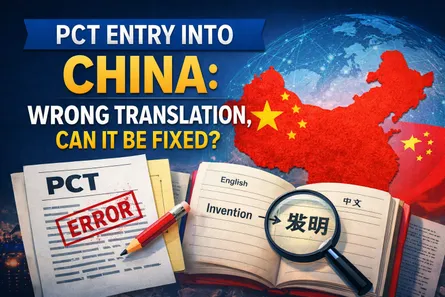
If a Translation Error Narrows Your Patent in China — Will CNIPA Be Sympathetic?

If a Translation Error Narrows Your Patent in China — Will CNIPA Be Sympathetic?

Here is a scenario I’ve seen damage Chinese patent portfolios more than once:

A foreign company enters China’s national phase via PCT. The Chinese translation is done quickly, under deadline pressure, without sufficient technical review. A single term — a materials specification, a functional description, a dimensional range — is translated too narrowly. The original PCT application covers “metal alloy”; the Chinese translation reads “aluminum alloy.” Now the examiner works with the Chinese text. The granted patent is limited to aluminum alloy. The company’s actual product uses a titanium alloy.

The question everyone asks afterward: Will CNIPA let us correct it?

The honest answer: sometimes, but the standard is strict and the window is short.

How CNIPA Treats Translation as the Binding Text

This is the foundational issue. Under China’s patent system, the Chinese translation you submit at national phase entry becomes the operative text for examination purposes. CNIPA does not conduct examination on the original English (or other language) PCT application. The Chinese document is what examiners read, cite, and base their assessment on.

This is different from some other jurisdictions where the original application remains the reference. In China, if there is ambiguity or conflict between the original PCT filing and the Chinese translation, the Chinese translation governs — unless you successfully obtain a correction.

The Correction Mechanism: What Exists

China’s Implementing Regulations do provide a mechanism for correcting errors in translations submitted at national phase entry. The relevant provision allows an applicant to request correction of an obvious translation error when:

  1. The mistake is clearly an error — not a judgment call or intentional drafting choice, but an actual mistranslation.
  2. The correction would restore the Chinese text to accurately reflect the original PCT application.
  3. The correction does not introduce subject matter that goes beyond the original PCT application as a whole.

The third condition is the critical one. If the mistranslation was a narrowing of the original PCT disclosure, correcting it should not violate the no-new-matter rule — because you’re restoring the original scope, not adding something new.

Where the Process Gets Difficult

In practice, “obvious translation error” is interpreted narrowly by CNIPA examiners. Here is where applicants run into problems:

The error is arguable, not obvious. If there are two plausible Chinese translations of a term and one happens to be narrower, CNIPA may view the narrower translation as a reasonable choice rather than a clear error. “Reasonable choice” is not correctable. “Clear mistranslation” is.

The correction window has passed. CNIPA has a time limit for requesting translation corrections. Applicants who discover a translation problem late in prosecution — or after grant — have very limited options. Post-grant correction is even harder.

The correction requires supporting evidence. To successfully correct a translation error, you typically need to provide the original PCT text (in the original language), a side-by-side comparison, and often a declaration or explanation showing that the Chinese translator deviated from the source. Without this documentation, the request is unlikely to succeed.

Is CNIPA Sympathetic?

Straightforwardly: less than you might hope. The Chinese China Patent system is procedural and examiners work within defined standards. They are not adversarial, but they are also not inclined to exercise generous discretion where the rules are not clearly on your side.

CNIPA will review a well-documented correction request for an obvious error fairly. What it will not do is accept borderline arguments, overlook timing requirements, or allow corrections that stretch into new matter territory even slightly.

The applicants who succeed with correction requests are those who:

  • Identify the error early (before or during examination, not after grant)
  • Have kept the original-language PCT application and the Chinese translation in a form that allows direct comparison
  • Can demonstrate the error is unambiguous — not one of two reasonable interpretations
  • Work with a China Patent Attorney who understands CNIPA’s correction procedure and documentation requirements

The Real Lesson: Prevention Over Remedy

Every practitioner who has been through a translation correction request with CNIPA knows the same thing: the process is difficult, expensive, and uncertain. Even a successful correction takes months and significant attorney time. An unsuccessful correction leaves you with the narrowed patent permanently.

The correct response to translation risk is to prevent it, not to plan for correction. Here are the specific linguistic categories where narrowing errors most commonly occur in Chinese patent translation:

Functional language. English claim language like “configured to” or “operable to” has no direct Chinese equivalent with the same legal weight. Translators sometimes substitute 用于 (used for) which can be read as a use limitation rather than a structural feature. This subtly narrows scope.

Numerical ranges. Ranges like “between 10 and 50 mm” or “at least 80%” are sometimes rendered with the wrong boundary interpretation in Chinese (including or excluding endpoints). These discrepancies compound in prosecution when examiners apply the Chinese text literally.

Material and component generalizations. “Conductive material” translated as “金属” (metal) instead of “导电材料” (conductive material) — this exact type of narrowing gives rise to the titanium alloy scenario described above. In chemistry and materials patents, every noun is a potential claim scope trap.

Method claim verbs. Verbs describing process steps — especially in pharma, biotech, and software — often have multiple Chinese translations with different levels of specificity. The broader English verb may not have a direct Chinese cognate.

The practical prevention checklist:

  • Allocate 10+ business days for complex specifications, with technical review
  • Have a bilingual patent professional review the Chinese translation of your key claims before submission
  • Work with a translation provider that has subject-matter expertise, not just general technical translators
  • Review the translation yourself if you have Chinese language capability — at minimum, run the independent claims through a reverse translation and compare

Concerned about translation quality in your China patent applications?

Our China Patent team reviews PCT translations before national phase entry and handles CNIPA correction procedures when needed. Speak with a China Patent Attorney about protecting your claim scope from the start.

Related Posts

Practical Answers
blog-thumb
By Peter Lin/ On 12 Dec, 2025

Adult Products Often Get Rejected for Patents in China—Why?

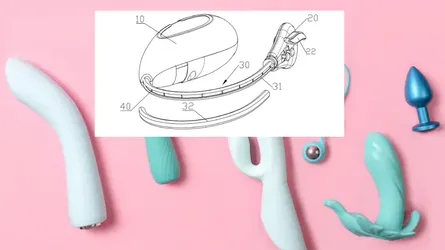
China's Patent Scene: Huge Opportunities, but Article 5 is a Hidden Minefield China's paAdult productsploding—global $50B by 2027 (Statista), with China leading manufacturing (Dongguan & Shenzhen). Yet Article 5 of the Patent Law is a silent killer, blocking grants for inventions seen as violating "social morality" or public interest. Designs saw a 15% rejection spike in 2024 due to visual cues, but utility and invention patents can stay steady if drafted right. The issue? Examiners tag products as "non-medical artificial sexual substitutes," sparking morality checks. From my examiner chats and database dives, if descriptions scream "intimate," initial reviews flop. Article content Kegel Exercises: Your "Medical Shield" to Bypass Article 5 How to flip it? Kegel exercises are your secret weapon. Developed by Dr. Arnold Kegel in the 1940s, these pelvic floor workouts help millions with incontinence, postpartum recovery, and quality of life (PubMed studies). In patents, a line like "vibration modes simulate Kegel contractions for muscle strengthening" shifts from "toy" to "health aid." Why? The 2023 guidelines say non-medical substitutes violate morals; Kegels provide real medical evidence (GB/T 14895-2010 standard), and examiners nod at that. In a case I handled, this turned a "no" into approval—but don't fake it; unsubstantiated claims risk fines. Article content patent illustration Drafting Magic: Lessons from a Smooth Success Case Drafting is the real art. Take CN223666103U, an "insertable electric massager" granted December 2025 without issues—just 10 months. It nailed it by focusing on "vibration mode indicators" over intimacy. CNIPA data shows medical-framed patents hit 85% approval in 2024, vs. 40% for pure adult ones. Here's their techniques vs. pitfalls I've fixed Article content This echoes trends: 2023 guidelines stress public acceptance—Taobao sales or Shanghai expos aren't "immoral." But controversies persist: Unproven health claims lead to rejections. Examiners aren't anti-innovation; they just need proof it's beneficial, not boundary-pushing. For Global Players: Stack US/EU Patents For global players, stack US/EU patents—USPTO's lenient on health claims, perfect for Amazon enforcement. Faced challenges in sensitive tech patents? Share below—I'd love your stories! #PatentStrategy #AdultWellness #ChinaIP #KegelInnovation #EntrepreneurJourney Key Citations: China National Intellectual Property Administration (CNIPA) Database Statista Adult Wellness Market Report PubMed on Kegel Exercises Beijing IP Court Case (2019) Jing 73 Xing Chu 3870 2023 Patent Examination Guidelines For more article, visit our Linkdedin newsletter: https://www.linkedin.com/newsletters/china-ip-gateway-7392039659566153728/

Practical Answers
blog-thumb
By Peter Lin/ On 19 Mar, 2026

China Invention Patent vs Utility Model: Which One Fits Your Situation?

Foreign applicants often assume that a “real patent” strategy in China means filing only an invention patent. That assumption is understandable. In many jurisdictions, clients are taught to think primarily in terms of one major patent route. But China gives foreign applicants a more practical range of filing choices, and one of the most misunderstood is the utility model. The result is that some companies underuse a tool that could have helped them, while others treat it as a shortcut without understanding its limits. The Real Question The real question is not: “Which one is better in general?” The real question is: “What kind of product, timeline, disclosure stage, and enforcement need do I have in China right now?” That is what should determine whether invention, utility model, or a combined strategy makes sense. What Foreign Applicants Often Miss Many foreign clients miss two things at once. First, they assume the invention patent is always the only serious route worth discussing. Second, they underestimate how useful a faster, narrower, more practical filing can be when the commercial pressure is immediate. This matters especially for:hardware products; consumer devices; tools and fixtures; structural improvements; products already moving toward manufacturing; situations where speed matters almost as much as long-term scope.A Simple Working Difference A useful practical distinction is this: Invention patent Best when the core value lies in the technical solution itself, and the applicant wants stronger long-term protection logic even if the path is slower and more demanding. Utility model Best when the protectable value lies in the structure or configuration of a product and the applicant needs a faster and often more commercially tactical filing route. That does not make utility model “less serious.” It makes it different. When an Invention Patent Often Makes Sense An invention patent route often deserves serious attention when:the core value lies in a deeper technical concept; the business wants a stronger long-term prosecution path; the product will remain important over a longer market cycle; the applicant can tolerate a more demanding route; the invention is not just a visible structural tweak.For many software-adjacent, algorithm-heavy, chemistry, materials, process, or more technical device matters, invention filing remains the main path to consider. When a Utility Model Often Makes Sense A utility model often deserves attention when:the protectable value is embodied in product structure; the product is hardware-oriented; manufacturing exposure is approaching quickly; the business needs earlier practical leverage; the commercial life cycle may reward speed.This is one reason utility models often matter in China-facing supply chain situations. By the time many foreign teams begin thinking seriously about China, they are already close to supplier engagement, sample work, tooling, or production transition. At that stage, a fast and practical route can matter more than they originally assumed. When Filing Both Can Make Sense Some foreign applicants are surprised to learn that the right answer may not be “either/or.” A dual-track approach can make sense when:the product has meaningful structural protectability now; the applicant also wants a longer-term invention route; the business needs earlier tactical protection while preserving a fuller prosecution path.This is not appropriate for every case. But in the right matter, it can create a much more realistic China protection posture than a one-route-only mindset. What Usually Matters First Here is the sequence I usually suggest clients think through. 1. What exactly is protectable? Is the protectable value in deep technical content, visible product structure, design appearance, or some combination? 2. How close are you to disclosure or manufacturing? If supplier-stage exposure is near, the timeline question becomes more important. 3. What does your commercial window look like? Some products need practical leverage earlier. Some justify a longer and heavier protection route. 4. Is the route being chosen in isolation? Patent route decisions are weaker when they ignore factory timing, contract protection, or brand exposure. How This Connects to Manufacturing and Contracts Patent route decisions in China often get mishandled because they are discussed as if they live inside a filing silo. In practice, the patent question often overlaps with:supplier disclosure timing; tooling development; production launch sequencing; contract protection; China trademark visibility if the product is already branded.If you are already near Chinese factory conversations, the patent route should not be discussed alone. It may need to be coordinated with China NNN & OEM Agreements. If your filing involves more complex route or prosecution judgment, China Patent Attorney may be the better next page. If you want the practical filing route overview first, start with China Patent Filing Support. The Wrong Way to Decide The wrong way to decide is to reduce the issue to one sentence like:“Utility model is cheap, so let’s do that.” “Invention is the serious one, so let’s ignore utility model.” “We can wait until after manufacturing starts.” “We only need to think about the filing form.”Those are all examples of treating China filing as paperwork instead of strategy. A Better First-Step Discussion A better first-step discussion asks:What are we actually trying to protect? How quickly does exposure increase if we wait? Is a dual route worth considering? Does our manufacturing timeline change what is practical? Are we trying to save filing cost in a way that creates bigger downstream risk?That is usually the conversation that produces the right route. Frequently Asked Questions Is a utility model always the faster route? It is often used where speed matters, but speed alone should not decide the filing route. The product type, claim focus, and commercial goal still matter. Is an invention patent always stronger? Not in every practical business sense. It may be stronger for some objectives, but it can still be the wrong first move if the timing, product structure, or commercial reality points elsewhere. Should I discuss this before talking to Chinese suppliers? Very often, yes. If supplier disclosure is close, route timing matters more than many foreign applicants realize. Final Thought The choice between invention patent and utility model in China is not a prestige question. It is a sequencing and fit question. The best route is the one that matches your product, your exposure timing, and your real business need in China — not the one that sounds most familiar from another jurisdiction. If you are at that stage now, start with China Patent Filing Support, or review China Patent Attorney if you need a more strategy-heavy discussion.

Practical Answers
blog-thumb
By Peter Lin/ On 19 Mar, 2026

Do I Need a China Trademark Before I Talk to a Manufacturer?

A surprising number of foreign brands begin talking to suppliers, packaging vendors, sourcing agents, or manufacturers in China before they have taken even a basic China trademark step. That usually feels efficient at first. The team wants to move. Samples need to be discussed. Packaging language needs to be tested. Product names start appearing in decks, emails, mockups, and quotations. Everyone tells themselves the trademark can be handled “once things get more serious.” In many cases, that is exactly backwards. The Real Question The question is not whether you need a China trademark eventually. If China matters commercially, that answer is usually yes. The real question is: Do you need at least some China trademark thinking before your brand begins circulating through manufacturing, sourcing, packaging, or go-to-market conversations? For many foreign brands, the answer is also yes. That does not mean every business must file immediately in all classes before any contact with China. But it does mean that brand exposure often starts earlier than founders expect — and earlier than many teams budget for. Why This Issue Starts Earlier Than People Think Many foreign clients assume trademark risk begins when they officially launch in China. In practice, it can begin much earlier:when the product name appears in supplier emails; when packaging artwork is shared for quotation; when a logo file is circulated for printing or molding; when a distributor or factory sees the English mark and starts asking whether there is a Chinese name; when the team uses the brand publicly in trade channels connected to China.At that point, your brand is no longer living only inside your own internal business. It has entered a wider commercial environment. What Foreign Brands Often Miss The most common mistake is treating manufacturing and trademark protection as separate phases. A brand owner may think: “We are not launching yet. We are only sourcing.” But if your supplier relationships, packaging references, product labels, mockup files, or Chinese market plans are already tied to a specific brand identity, then the trademark question has already started. And once a brand becomes commercially visible in China-facing conversations, waiting may stop being a neutral choice. What Usually Matters First Not every case needs the same first move. Here is a practical way to think about it. If you already have a final English brand name Do not assume that is enough. Ask whether the English mark itself should be reviewed for China filing, and whether a Chinese name strategy should begin now rather than later. If you are sharing packaging or product branding with suppliers You are already beyond pure “internal planning.” At minimum, you should assess filing timing and subclass coverage before broader exposure grows. If you do not yet know your final China-facing brand structure That is exactly why a review is useful. It is often better to clarify the route before a name begins spreading informally. If you are in a hurry That is not unusual. But speed is a reason to make the right first move, not a reason to skip it. Why Supplier Conversations Can Increase Brand Risk A supplier relationship is not automatically a trademark problem. But it can become one quickly because suppliers often sit close to other parts of the market:packaging vendors; other factories; distributors; sourcing intermediaries; logistics and customs-facing service providers.The more your branding circulates, the less control you have over where and how it is seen. That is why contract protection alone is not enough. A supplier-stage document may help reduce disclosure and misuse risk, but it does not replace registration strategy. If your issue is on the contract side, review China NNN & OEM Agreements. If your issue is on the brand side, the right next page is China Trademark. Why China Trademark Work Is Not Just “File One Mark, One Class” Another mistake foreign brands make is thinking this issue is simply about getting one certificate. In real work, early China trademark decisions often involve:whether the English mark should be filed as-is; whether a Chinese name should be created now; how subclass logic affects practical coverage; whether the current manufacturing stage justifies broader or narrower action; whether filing should be coordinated with product launch timing and supplier exposure.That is why a practical first review is often more valuable than rushing blindly into a filing that feels cheap but solves the wrong problem. How This Connects to Patents and Contracts For many physical-product businesses, the brand question is not isolated. Contract layer If you are about to disclose product details to a Chinese factory, you may also need contract-side protection, especially around non-use, non-disclosure, and non-circumvention. That is a different layer from trademark registration, but the timing often overlaps. Patent layer If the protectable value is also in product structure or function, the patent timing question may need to be addressed before deeper supplier disclosure. In that case, China Patent Filing Support becomes relevant too. The practical point is simple: If China supplier conversations are starting, your brand, product, and contract exposure may all be starting together. What a Good First Step Looks Like A good first step is usually not “file everything immediately” or “do nothing until launch.” It is usually a structured first review that asks:What brand is actually in use? Is there a likely Chinese name issue? What classes and subclasses matter commercially? Has supplier-stage exposure already begun? Do contract and patent timing need to be reviewed at the same time?That is why a staged trademark entry path is often the most practical option. You can review the route through China Trademark or, if you are deciding among packaged starting points, check Pricing. Frequently Asked Questions What if I am only talking to one factory and trust them? Trust is valuable, but trust is not a substitute for structure. A factory conversation can still create wider exposure than founders expect, especially when branding appears in packaging, samples, sourcing discussions, or related vendor interactions. Do I need a filed China trademark before every supplier conversation? Not always. But you do need to know whether the conversation you are about to have is likely to create enough brand exposure that filing should no longer be postponed casually. What if I have not decided on a Chinese brand name yet? That is common. The right response is not to ignore the issue, but to decide whether Chinese naming should be part of the early brand plan. Final Thought A China trademark is not just a “market entry formality.” In many cases, it is part of the preparation work that should happen before manufacturing-side exposure expands. If your brand is about to enter supplier, packaging, or sourcing conversations tied to China, the most practical move is to review the route before the brand spreads faster than the protection around it. Start with China Trademark or Talk to Us if you want a practical first-step view.

Practical Answers
blog-thumb
By Peter Lin/ On 15 Dec, 2025

How Much Can You Really Amend Claims When Entering China via PCT?

One of the most common questions I hear from foreign inventors entering China via PCT is: "I want to adjust my claims before the Chinese prosecution starts — how much can I actually change?" The honest answer is: more than you think in terms of scope reduction, but far less than you think in terms of new content. And the boundary between the two is where applicants get into trouble. What the Rules Say When entering China's national phase via PCT, you are technically allowed to amend your claims. CNIPA accepts amendments at national phase entry under China's Patent Law and the Implementing Regulations. But those amendments are subject to a fundamental constraint: No amendment may introduce subject matter that goes beyond the original disclosure — meaning the content of the international application as filed. This rule appears in the Chinese Patent Law broadly, and CNIPA examiners apply it consistently. The relevant standard is "beyond the original disclosure," not just "beyond the original claims." That distinction matters significantly. What You Can Do: The Permitted Range Within the no-new-matter rule, the following types of amendments are generally permitted: Narrow the independent claims. You can import limitations from your dependent claims into an independent claim, making it narrower and more specific. This is the most common and useful type of amendment at national phase entry. Delete claims entirely. Removing claims — whether to reduce fees (claims beyond 10 are surcharged) or to simplify prosecution — is permitted. You cannot, however, re-add them later without going through a formal amendment process. Combine dependent claims into a new independent claim. If a combination of features from two dependent claims is fully supported by your specification, you can combine them into a new independent claim. This is useful for creating a stronger fallback position. Correct obvious translation errors. If your Chinese translation contains an error that results in a narrower scope compared to the original PCT application, you can request correction — but only if the correction is directly and unambiguously supported by the original international filing. What You Cannot Do: The Hard Line Add features not in the original specification. If a feature was never described anywhere in your international application — not in the claims, not in the description, not in the drawings — you cannot add it to your claims at national phase entry. CNIPA will reject the amendment as introducing new matter. Broaden claim scope beyond what was disclosed. You cannot broaden an independent claim to cover subject matter that was described only as a narrower sub-case in the original application. For example, if your specification only describes an embodiment using "copper wire," you generally cannot amend the claim to read "conductive wire." Import content from prior art or external sources. Even if something is technically compatible with your invention, it must be described in the original application to be incorporated into claims. The Common Mistake: Over-Relying on What's in the Specification I see this pattern regularly: an applicant wants to amend their China Patent claims to add a feature that was mentioned in the background section or in a general statement of advantage — but never specifically claimed or described as a component of the invention. CNIPA examiners draw a tight circle around "original disclosure." A feature in the background section is not always treated as part of your invention disclosure. A general admissibility statement ("the invention may also include...") without a specific embodiment is often not enough to support a claim amendment. The lesson: your specification's disclosure quality, written at the time of the original PCT filing, determines your amendment latitude in China — often 28+ months later. Practical Strategy: Front-Load Your Disclosure The best way to maximize your amendment options in China is to draft your international application with China specifically in mind:Include multiple specific embodiments in the description, not just one or two. Write out dependent claims carefully — each one represents a fallback position you can later elevate into an independent claim. Avoid overly narrow "examples" without broader claim support language.A China Patent Attorney can review your existing PCT application and identify which amendments are genuinely available to you before national phase entry — and which wishlist items are off the table. What About Article 34 Amendments? Before entering the national phase, you may also have used PCT Article 34 to request preliminary examination and amend claims internationally. Those amendments, if already incorporated into your PCT application, become the new baseline for China national phase entry. However, China is not obligated to accept them if they introduced new matter by PCT standards — and CNIPA performs its own assessment.Need to review your PCT application before China national phase entry? Our China Patent specialists can audit your pending PCT applications and advise on amendment strategy. Or speak directly with a China Patent Attorney about your specific filing.

Practical Answers
blog-thumb
By Peter Lin/ On 19 Mar, 2026

NDA vs NNN for China: What Foreign Innovators Get Wrong

If you are preparing to talk to a Chinese supplier, the first legal document that usually comes to mind is an NDA. That instinct makes sense. In many Western business settings, an NDA is the standard first step before sharing product information, pricing assumptions, technical drawings, or supplier requirements. But China factory-side risk often does not begin with disclosure alone. It begins with what happens after disclosure: use, replication, side production, customer bypass, tooling misuse, and commercial workarounds that a standard NDA was never built to stop. That is where many foreign founders and brand owners misjudge the situation. They believe they are “covered” because they sent over a familiar English-language NDA. In reality, the document may be too narrow, too soft, or too disconnected from the actual way manufacturing risk develops in China. The Real Question The real question is not whether an NDA is “good” or “bad.” The better question is: What exactly are you trying to stop before you start talking to a Chinese supplier? If you are only worried about pure disclosure, an NDA sounds logical. But most foreign companies are worried about more than that. They are also worried about:a supplier using what it learns to make similar products for others; a supplier bypassing them to reach distributors, customers, or sourcing contacts; a factory treating their product information as commercially reusable know-how; a factory-side relationship moving faster than the brand, patent, or contract structure protecting it.That is why the conversation has to move beyond “Do I have an NDA?” and toward “Have I actually locked down the right risks?” What People Often Miss Foreign innovators usually underestimate how quickly one early supplier conversation can create multiple kinds of exposure at once. You may be discussing:technical features that should have been patent-filed first; product branding that should already be protected as a China trademark; samples, drawings, BOMs, molds, or production tolerances that should not be reused; supply chain contacts that should not be cut around.In other words, your supplier-stage problem is often not just a confidentiality problem. It is a commercial control problem. That is why an NNN agreement is usually the more useful concept in China-facing supplier work. It is designed around three practical concerns:Non-disclosure — do not disclose what I share; Non-use — do not use what I share for your own benefit or for third parties; Non-circumvention — do not go around me to reach the relationships, channels, or commercial structure behind the project.That still does not make NNN a magic document. It simply makes it a more realistic starting point than a generic NDA when the real risk is factory-side misuse. Why a Standard NDA Often Falls Short A standard NDA often fails in one of four ways. 1. It focuses too narrowly on secrecy Many NDAs are drafted as if the only real danger is public disclosure. But Chinese manufacturing risk frequently involves private misuse, not public publication. 2. It does not address commercial bypass behavior A supplier may not “leak” your information publicly and may still create serious damage by using it in competing production, parallel supply, or direct customer contact. 3. It is not built for China-facing enforceability A contract can look polished and still be weak in practice if it does not fit the enforcement reality you are actually entering. 4. It is disconnected from your IP timing If you have not handled your China trademark plan or your patent filing sequence, even a better contract may still leave you exposed. What Usually Matters First Most readers do not need a long legal lecture. They need a sequence. Here is the practical sequence I usually recommend: If your issue is mainly about supplier conversations Start with the contract structure first. If you are about to send specifications, CAD files, component logic, or commercial terms, do not wait until “later” to think about document control. If your issue is mainly about product protection Check whether a China patent filing should happen before deeper disclosure. If your protectable value is in structure, function, or product design, timing matters. If your issue is mainly about brand exposure Ask whether your China trademark strategy is already in place. If your brand name, logo, or Chinese name may surface in supplier discussions, do not assume you can safely defer trademark action. If your issue is mainly about manufacturing scale-up Move beyond a first-stage NNN and think about whether you now need a fuller OEM or manufacturing agreement. How This Connects to Trademarks, Patents, or Contracts This is the part many general contract providers miss. A China-facing supplier document should not be treated as a standalone legal paper detached from the rest of your IP posture. Trademark connection If your factory, packaging vendor, or sourcing contacts see your brand before you have a serious China trademark plan, the contract is trying to compensate for a registration gap. That is usually not the best position to be in. If branding is already in play, review your route through China Trademark before assuming contract language is enough. Patent connection If the sensitive value lies in the product itself — structure, mechanism, hardware design, or technical solution — the timing of patent action may matter just as much as the wording of the supplier agreement. If your issue is not just confidentiality, but product protectability, look at China Patent Filing Support before supplier disclosure becomes your first irreversible move. Contract connection If you are still in the pre-supplier or early supplier stage, China NNN & OEM Agreements is usually the best next page to review. It is where the factory-side protection logic becomes more specific. When an NNN Is Still Not Enough An NNN agreement is often a first-stage document, not the final one. Once you move deeper into production, you may need a fuller structure covering issues such as:tooling and mold ownership; production exclusivity or restrictions; quality control obligations; subcontracting limits; inspection rights; product ownership and leftover inventory; post-termination handling; practical breach consequences.At that point, the right question is no longer “Do I need an NDA or NNN?” It becomes: Do I now need a full manufacturing agreement with the right IP logic built in? Frequently Asked Questions Is an NDA completely useless for China? Not necessarily. In some early commercial settings, an NDA may still have a limited signaling role. The problem is not that every NDA is worthless. The problem is that many foreign companies mistake a familiar NDA for sufficient factory-stage protection. Do I always need an NNN before talking to a supplier? Not every conversation carries the same risk. But if the conversation involves meaningful product, sourcing, pricing, customer, tooling, or production information, it is often risky to treat contract protection as an afterthought. Should I handle the trademark first or the supplier agreement first? It depends on what is about to be exposed first. In many real matters, both need to move together. That is why a coordinated review is usually better than a narrow one-document answer. Final Thought The biggest mistake foreign innovators make is not choosing the “wrong acronym.” It is assuming one familiar document solves a multi-layered China entry problem. If you are about to speak with a Chinese supplier, the practical question is not just “Do I have an NDA?” It is whether your contract layer, trademark layer, and patent timing are aligned before exposure starts. If you are already at that stage, review China NNN & OEM Agreements or Talk to Us and map the risk before it grows into something more expensive.

Practical Answers
blog-thumb
By Peter Lin/ On 08 Dec, 2025

Paris Convention vs. PCT in China: A Critical Difference Most Inventors Miss

Last year a Dutch hardware startup came to me eight months after filing their first patent in the Netherlands. They had a working product, a potential distributor in Shenzhen, and a growing sense that they should probably protect something in China. Eight months was still within the Paris Convention window. But when I asked whether they had a finalized Chinese translation of their specification ready to file, the answer was no — and their September launch timeline meant four months were the most they could realistically get. That conversation is where the Paris Convention versus PCT question becomes real. In theory, both routes let you claim your Netherlands filing date as your priority date in China. In practice, only one of them gave this team the time they actually needed. The two main options are the Paris Convention direct route and the PCT route, and in China specifically, there are differences that can significantly affect your cost, timeline, and final patent scope. The Basic Framework Both routes allow you to claim the priority date from your original domestic filing when you eventually file in China. That priority date matters enormously in China's first-to-file system — it determines whether you beat a competitor to protection rights.Paris Convention route: File directly in China within 12 months of your first filing date. PCT route: File an international PCT application (within 12 months of your first filing), then enter China's national phase within 30 months of your priority date.That extra 18 months the PCT route provides is not just a filing convenience. It's a strategic window that most inventors underuse. The Critical Difference Most Miss Here's what I see inventors get wrong again and again: When you file directly into China via the Paris Convention route, you must have a fully translated Chinese application ready within 12 months. That means your specification, claims, and abstract — all in Chinese — submitted together with your filing fee. For an early-stage startup, 12 months from first filing is often not enough time to finalize your design, assess the Chinese market, or arrange quality translation. The PCT route, by contrast, lets you delay that commitment. You file the international PCT application in your own language (typically English), and the Chinese translation only needs to be submitted when you enter the national phase at month 30. That's an additional 18 months to refine your claims, secure funding, or assess whether China is worth the investment. Why China Specifically Amplifies This Gap Many PCT member countries accept English filings even at national phase entry. China does not. CNIPA requires a full Chinese translation of your application at national phase entry. A poor translation can cost you claim scope — permanently. Under Chinese patent practice, if there is a discrepancy between the original PCT application and the Chinese translation, CNIPA will generally rely on the Chinese translation as the basis for examination. This makes translation quality a strategic issue, not just a clerical one. The extra time the PCT route provides lets you commission and review a professional-grade translation — rather than rushing one through in the final weeks before a 12-month Paris Convention deadline. The Trap: Assuming PCT Is Always Better PCT is not universally superior. Here's when the Paris Convention direct route makes more sense for China Patent filings:You are confident about the Chinese market now. If you have a distribution partner, manufacturing arrangement, or real commercial activity in China within 12 months, you may not need the extra time. Your technology is simple and the application is short. Translation cost and risk are proportional to specification length. A 10-page utility application translates much faster and more reliably than a 100-page biotech filing. You want to avoid PCT fees. PCT filing has its own international fee structure. If you're early-stage and China is your only international target, the direct route may be cheaper overall.What a China Patent Attorney Will Actually Tell You When I advise clients as a China Patent Attorney, this is the question I always ask first: How confident are you today about what your Chinese patent needs to protect? If the answer is "very confident, and we have a product ready to launch," the Paris Convention route is often fine. If the answer is "we think China matters but we're still refining the product," the PCT route is almost always the right choice — not for the extra protection it adds, but for the strategic flexibility it buys. A Simple Decision FrameworkSituation Recommended RouteProduct is final, China launch within 12 months Paris Convention directStill refining design or claims PCT → China national phaseMultiple countries beyond China PCT (efficiency of one filing)Budget-constrained, China only Paris Convention (lower upfront cost)Complex specification, translation risk PCT (more time for quality translation)Have questions about your China patent filing strategy? Explore our China Patent services or speak with a China Patent Attorney about whether Paris Convention or PCT is the right route for your situation.

Practical Answers
blog-thumb
By Peter Lin/ On 12 Dec, 2025

PCT Patent Entry into China: A Cost Lock-In Mechanism Many Applicants Overlook

There is a moment, usually around month 28 or 29 of your PCT application's life, when your China IP strategy becomes a cost reality. The application that started as an idea — and grew through drafting, international search, and maybe some Article 19 amendments — now has to become a paid-up Chinese patent prosecution. What many applicants find surprising is how much of that cost was already locked in by decisions made much earlier. This is what I call the cost lock-in mechanism of PCT entry into China. What Gets Locked In at National Phase Entry When you enter China's national phase, CNIPA's official fees are calculated based on the application as it stands at entry. Specifically: 1. Claim count. China charges a per-claim surcharge for every claim beyond the first ten. If your PCT application has 25 claims, you're paying surcharges on 15 of them upfront — before a single examination action. This is calculated from the claims in your Chinese translation at the time of national phase entry. 2. Page count for specification. China's official fee structure also includes charges based on application length above a base threshold. A long international specification — common in US and European biotech or software filings — translates to elevated fees. 3. Translation volume. Unlike most Western patent offices, CNIPA requires a complete Chinese translation of your entire application at national phase entry. The word count in your international specification drives translation costs directly. A 200-page biotech specification translated at professional patent rates is a significant line item. 4. Number of independent claims. Prosecution strategy in China often hinges on independent claims, and CNIPA's fee structure treats them differently from dependent claims. Applicants with multiple independent claims per claim category (product + method + use) face compounded costs. Why "Lock-In" Happens in Practice These cost drivers are not surprising in isolation. What makes them a lock-in mechanism is that they were all set at the time your international PCT application was drafted — often 18 to 28 months before you ever think about China costs. The original PCT drafter may have been a US firm optimizing for a large US claim set. The specification may be 150 pages because that's what a US biotech application requires. The claims may number 30 because that's what a US prosecution strategy demands. None of that is wrong for the US. But entering China's national phase with that original application, unchanged, means you're paying for a US-optimized filing in a system with a very different fee structure. The Three Levers You Can Still Pull Even though costs are largely locked in by the original application, you do have options to reduce them — if you act before national phase entry. Lever 1: Amend claims before entry. Under PCT provisions and China's national phase rules, you can amend your claim set when entering the national phase. Reducing from 25 to 10 claims before filing the Chinese translation eliminates surcharges on 15 claims from day one. Work with a China Patent Attorney to identify which claims are commercially necessary in China and which are redundant for your specific enforcement context. Lever 2: Trim the specification. If there are entire sections of your specification that are irrelevant to your China commercial strategy — detailed manufacturing examples for processes you don't use in China, regulatory guidance for systems not sold there — you may be able to reduce the document length without affecting claim support. This is technically sensitive work and needs expert review, but can materially reduce translation and page-count fees. Lever 3: Time your filing carefully. CNIPA applies fee rates based on the filing date. Fee schedules are periodically updated. While this is not always a controllable variable, large multinationals with portfolios sometimes time batch filings to a known fee period. A Cost Estimate to Make This Concrete For a typical mechanical or hardware China Patent application entering via PCT with 20 claims and a 50-page specification, you're typically looking at:Official filing fee: ~RMB 950 base Claim surcharges (10 claims over base × RMB 150): RMB 1,500 Translation (50 pages × professional rate): RMB 5,000–12,000+ Professional services (national phase formalities, claim strategy): variableCompare that to the same application trimmed to 10 claims: the surcharge line drops to zero. Over a portfolio of 20 applications entering China in a single year, that's a meaningful difference. The Upstream Solution The best time to manage China national phase costs is not at month 29. It's at the drafting stage, when you structure your PCT application with China's fee logic in mind. This doesn't mean writing a weaker patent. It means structuring claims and specifications in a way that is both strong for the US and efficient for China — not identical, but compatible.Ready to plan your China national phase entry? Our China Patent team works with applicants at every stage of the PCT timeline. Or speak with a China Patent Attorney to review your pending applications before the 30-month deadline.

Practical Answers
blog-thumb
By Peter Lin/ On 17 Dec, 2025

A Simple Way to Cut China Patent Costs When Using PCT — Without Giving Up Protection

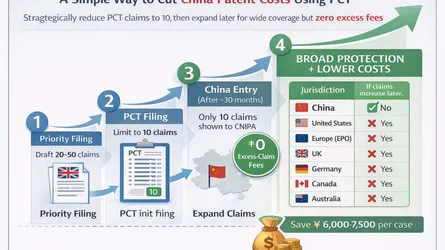
Let me say something directly: most foreign companies entering China via PCT are paying more for their Chinese patents than they need to. Not because of unfair fees, and not because their technology is especially complex — but because nobody has walked them through the specific cost levers that exist in this system. This is a practical guide to those levers. Understanding Where China Patent Costs Come From Before you can cut costs intelligently, you need to know where they go. For a typical China Patent application entering via PCT, the main cost buckets are:Official CNIPA fees: Filing fees, claim surcharges, examination fees Translation fees: Chinese translation of the full specification, claims, and abstract Professional services: Attorney or agent fees for formalities, claim strategy, and prosecution management Office action responses: Costs that arise if CNIPA examiner raises objections after filingThe first three are largely determined by what you submit at national phase entry. The fourth depends on how well you handled the first three. Lever 1: Reduce Claims to 10 or Below This is the single most effective cost reduction available to most applicants, and it's often overlooked because it requires a strategic decision rather than just a procedural one. China charges an extra fee for every claim beyond the first ten. At the current CNIPA fee schedule, each additional claim costs RMB 150 extra in filing fees — and this is per claim, per application, at entry. For an application with 25 claims, that's RMB 2,250 in surcharges before prosecution even begins. Across a portfolio of 10 applications, you're looking at RMB 22,500 in preventable costs. More importantly: reducing claims forces a useful discipline. Which 10 claims actually capture what you need to protect in China? That forced prioritization almost always produces a stronger prosecution strategy. Work with a China Patent Attorney to review which claims are genuinely necessary for Chinese market protection and which are redundant or commercially irrelevant for this jurisdiction. Lever 2: Use the International Search Report to Pre-Empt Office Actions One of the underutilized advantages of PCT is that you receive an International Search Report (ISR) — typically by month 16 from your priority date — that identifies prior art relevant to your claims. Most applicants read this report once and file it away. A smarter approach: use the ISR to narrow or differentiate your claims before China national phase entry. If the ISR identified prior art that your current independent claim reads on, addressing that in your Chinese claim set before entry means you avoid the same objection being raised by a CNIPA examiner six months into prosecution — which costs you an office action response fee, attorney time, and months of delay. Pre-emptive amendment based on ISR findings is one of the clearest, lowest-cost interventions available before the 30-month deadline. Lever 3: Trim the Specification Length Where Possible China's official fees include a per-page component above a base threshold. More consequentially, translation costs are purely volume-driven. Review your international specification with a China-specific lens:Are there multiple detailed examples that describe the same embodiment with minor variations? Consolidating these reduces page count without affecting claim support. Are there sections discussing prior art in excessive detail? These may be necessary for US prosecution but add translation cost in China. Are there drawings that replicate each other with minimal difference? Each drawing page has a cost.Trimming even 20–30% of specification length can produce meaningful savings, especially for large mechanical or pharma filings where descriptions commonly run 100+ pages. Lever 4: Sequence Your Portfolio Entry Strategically If you have multiple PCT applications approaching the 30-month deadline in the same period, the sequence and grouping of national phase entries matters. Some applicants enter all applications simultaneously, paying a large lump sum of fees and translation costs in a short window. Others sequence entries across 3–6 months to smooth cash flow and allow claim review on each application before committing. More importantly: if two related applications in your portfolio cover overlapping technology, entering them simultaneously allows a single attorney review session to address both claim strategies — reducing professional fee overhead compared to treating each in isolation. What You Don't Have to Give Up The goal here is cost efficiency, not weakened protection. A 10-claim application with three tight independent claims and seven well-structured dependent claims can be more defensible in Chinese courts and licensing contexts than a sprawling 30-claim application that's never been tested. Chinese IP enforcement increasingly focuses on specific, clean claims. Clarity and focus are assets in China's court system and in licensing negotiations — not liabilities.Want a pre-entry cost review for your PCT applications? Our China Patent team provides claim strategy and cost analysis before your 30-month deadline. Speak with a China Patent Attorney today.

China IP Guides
blog-thumb
By Peter Lin/ On 10 Dec, 2025

12 vs. 30 Months: Mastering the Critical Windows for China Patent Protection

Two numbers define your strategic window for China Patent protection: 12 months and 30 months. Get them confused, miss one of them, or misunderstand what they actually trigger — and you could lose rights that no amount of money can recover later. I've seen this happen. A founder assumes the 30-month PCT deadline applies to their situation, misses the 12-month Paris Convention window, and loses China priority. The patent can still be filed, but it now faces prior art that didn't exist when the clock started. Let me walk through both windows precisely. The 12-Month Window: Your Priority Clock Starts Here When you file your first patent application anywhere in the world — whether a US provisional, a UK complete application, or a Chinese utility model — a clock starts. Under the Paris Convention, you have 12 months from that first filing date to file in other member countries (including China) and claim priority back to that original date. What "claiming priority" means in practice: if you file in China within 12 months of your original filing, CNIPA will treat your application as if it was filed on the original date. Any competing applications or disclosures that appeared after your original filing date won't be counted as prior art against you. The 12-month deadline is absolute. There is no extension. If you miss it, you cannot claim Paris Convention priority for that filing. What happens at month 12 if you're going via PCT? Nothing special — as long as you file your PCT application before the 12-month Paris Convention deadline. Your PCT application, filed within 12 months of your original application, preserves your priority date and pushes your real China national phase decision out to month 30. This is the key insight: filing a PCT application within 12 months doesn't mean you're entering China at month 12. It means you're buying time until month 30 while protecting your priority date. The 30-Month Window: Your China Entry Deadline If you've gone the PCT route, month 30 from your original priority date is when you must enter the Chinese national phase. This means:Submitting your Chinese translation of the full application Paying China's official filing fees (calculated on claim count and page count) Formally committing to prosecution in ChinaMissing the 30-month deadline is also absolute for most countries. China does not provide a general grace period for late national phase entry. A missed deadline means you must re-file without priority — and everything that's been published in the intervening 30 months can be used against you. The Zone Between 12 and 30 Months: Use It Most inventors and even some IP teams treat this 18-month window as administrative dead time. That's a waste. Here's how to use months 12–30 productively: Refine your claim strategy. Use this time to assess the Chinese market, identify your most commercially valuable claims, and prepare for the slimming strategy I've written about separately. You have until month 30 to decide exactly what claims you need in China. Commission quality translation. A Chinese patent translation done in a rush at month 29 is a liability. A translation reviewed over two to three months, with technical input from your team and legal review from a China Patent Attorney, is an asset. Watch the competitive landscape. PCT applications are published at 18 months from priority. That means by month 18, your application is public. Use the window from month 18 to 30 to monitor what competitors are filing in China — this directly informs whether your claim strategy needs adjustment. Amend under PCT Article 19 or 34. You have specific windows to amend claims and request preliminary examination during the international phase. These amendments can be used strategically to strengthen your position before China national phase entry. A Timeline You Should Pin to Your WallMilestone Deadline Consequence of MissingFile PCT application Month 12 from original filing Lose Paris Convention priorityPCT application published Month 18 Application becomes publicInternational Search Report Typically months 16–22 Evaluate claim viabilityPCT Article 19 amendments Before 16 months from priority Window to amend claims internationallyChina national phase entry Month 30 from priority Lose right to enter (no recovery)One Exception Worth Knowing Design patents (外观设计) in China follow a different, shorter path. The Paris Convention priority window for designs is only 6 months, not 12. If you're protecting a product's appearance — packaging, industrial design, device form factor — that 6-month window applies and moves much faster.Planning your China patent timeline? Our China Patent team manages your PCT timeline from first filing through national phase entry. Or speak directly with a China Patent Attorney about your specific situation.

China IP Guides
By Peter Lin/ On 23 Mar, 2026

We Filed in China — Can We Still Protect the Invention in Hong Kong? A Practical Guide for PCT and China Patent Applicants

A client recently wrote to me with a question that felt very familiar:"We already filed into China through PCT. Do we still have any option to file in Hong Kong? I was told this might be done on the back of the Chinese patent, but I also saw something online about a 6-month deadline after publication. Does that apply to our case?"This is one of those questions that sounds simple at first, but in practice it often determines whether a Hong Kong patent strategy is still alive or already lost. The short answer is: yes, Hong Kong may still be available after a China filing. But the route is separate, the timing is separate, and applicants often watch the wrong deadline. Hong Kong has its own patent system. A Mainland China patent does not automatically extend to Hong Kong, and Hong Kong protection must be handled on its own terms. Hong Kong currently offers standard patents and short-term patents; standard patents can be obtained either by the original grant route, known as standard patent (O), or by the re-registration route, known as standard patent (R). For clients who already filed through PCT and entered the China national phase, the best Hong Kong route is usually standard patent (R) based on CNIPA. Hong Kong expressly allows a standard patent (R) to be based on a patent granted by the China National Intellectual Property Administration, and the Hong Kong process for standard patent (R) is built as a two-stage filing system: first a request to record on Form P4, then later a request for registration and grant on Form P5. That is what many clients mean when they say, "Can we do Hong Kong on the back of the Chinese patent?" In substance, the answer is often yes. But the more precise answer is this: you may be able to use the China route as the designated patent route for Hong Kong, provided the Hong Kong time limits have not already expired. Why Standard Patent (R) Is Usually the Best Route After China For a China-linked case, standard patent (R) is usually the most natural route because it fits the filing structure the applicant has already chosen. Hong Kong's patent framework makes the distinction very clear: a standard patent (R) is based on an earlier corresponding patent application filed with a designated patent office, and CNIPA is one of those designated offices. A standard patent (R) application is subject mainly to formality examination, while a standard patent (O) is a direct Hong Kong filing subject to both formality and substantive examination. That difference matters in practice. If the invention is already being prosecuted in China, standard patent (R) often gives the cleaner route into Hong Kong. It follows the China track instead of opening a separate substantive examination path in Hong Kong. By contrast, standard patent (O) is a direct Hong Kong route and is generally more suitable when the applicant wants an independent Hong Kong filing track or cannot use the re-registration route. Hong Kong's own materials say standard patent (O) can be filed directly in Hong Kong and is subject to substantive examination, while standard patent (R) depends on the grant of the corresponding patent by the designated office. So for a client who has already gone PCT → China national phase, my first instinct is usually not to ask, "Should we file a fresh Hong Kong case?" My first question is: "Is the standard patent (R) window still open?" The Mistake Many Applicants Make: They Focus on the Wrong Date This is where real matters often go wrong. Some applicants think the Hong Kong deadline runs from the PCT international publication date. Others think it runs from the date they filed the Chinese national phase documents. Others assume they can wait until the CNIPA patent is granted and then decide later. For a PCT-based standard patent (R) route through CNIPA, Hong Kong's rules are more specific. The first-stage filing in Hong Kong must be made within six months after the relevant CNIPA event showing that the international application has entered the national phase in China. The exact trigger depends on the language of the international publication. If the international application was published by WIPO in a language other than Chinese, Hong Kong looks to the publication by CNIPA in its Patent Gazette of the relevant bibliographical data showing national phase entry. If the international application was published in Chinese, Hong Kong looks to the official notification by CNIPA showing that the application has entered the national phase in China. This point is extremely important. It means that the key Hong Kong deadline is often not the original PCT publication date, and not simply the day you filed into China, but the specific CNIPA publication or notification event recognized by the Hong Kong rules. In other words, for many cases the real question is not "Did we enter China?" but "What is the exact CNIPA trigger date for the Hong Kong six-month clock?" The Two-Stage Hong Kong Process After a China Filing If the timing is still open, the Hong Kong standard patent (R) route usually works in two clear stages. Stage 1: Request to Record The first stage is the request to record, filed on Form P4. For a PCT-based case entering China, Hong Kong requires the applicant to file this request within six months after the relevant CNIPA publication or notification event. Once the filing is accepted and formalities are in order, Hong Kong publishes the request to record in the Hong Kong Intellectual Property Journal. This is the stage many foreign applicants do not realize exists. They assume Hong Kong only becomes relevant after the China patent is granted. But by that time, the first Hong Kong deadline may already be gone. Hong Kong's FAQ also highlights this first-stage deadline as one of the non-extendible time limits for standard patent (R) matters. Stage 2: Request for Registration and Grant The second stage is the request for registration and grant, filed on Form P5. Hong Kong requires this to be filed within six months after the later of:the publication of the request to record in Hong Kong; or the grant of the designated patent by the designated patent office. For a China-based route, that designated office is CNIPA.Again, this deadline matters. Hong Kong's FAQ lists the second-stage filing deadline as another non-extendible time limit. So even after the first-stage filing is safely on record, the matter still needs to be docketed carefully through the China grant stage and the later Hong Kong filing stage. What If the China Case Takes a Long Time? That is a practical issue, because Chinese prosecution can of course take time. Hong Kong addresses this by allowing the applicant, in certain circumstances, to maintain the standard patent (R) application if the applicant cannot yet proceed to the second stage. The Hong Kong PCT-route guidance explains that if the case cannot proceed to the second stage, the applicant may wish to maintain the application before the expiry of the fifth or any succeeding year from the relevant anniversary of the designated patent application filing date following publication of the request to record. So the real docket is often not just:China grant → Hong Kong grantIt is more often:PCT enters China → CNIPA trigger event → Hong Kong P4 → wait → maintain if necessary → CNIPA grant → Hong Kong P5That is the structure clients should understand from the beginning. What Protection Term Do You Get? A granted standard patent (R) in Hong Kong can last for a maximum of 20 years from the filing date of the designated patent application, subject to annual renewal. The first renewal fee is due on the fourth anniversary of the filing date of the designated patent application following the grant of the Hong Kong standard patent (R), and renewals then continue on each anniversary date until the maximum term expires. Hong Kong also has a short-term patent route with a maximum protection term of 8 years, but for most international applicants looking at a serious China-plus-Hong Kong patent strategy, the more relevant comparison is between standard patent (R) and standard patent (O). When Might Standard Patent (O) Still Matter? Although standard patent (R) is usually the first route to consider after a China filing, standard patent (O) can still become relevant in some cases. The most obvious example is when the applicant has missed the six-month timing for the first-stage standard patent (R) filing. Another is when the applicant wants a direct Hong Kong filing rather than relying on the China grant track. Hong Kong's original grant route can be filed directly in Hong Kong, and in general there is no time limit for filing a standard patent (O), although if priority from a first application is claimed, the Hong Kong filing should generally be made within 12 months of the first application. Hong Kong also requires substantive examination for standard patent (O), which makes it a different strategic route from standard patent (R). So the practical order of analysis is usually this:First, check whether standard patent (R) is still available. If it is, that is often the best route. If it is not, then ask whether standard patent (O) still makes commercial and procedural sense.The Three Questions I Would Check First for Any Real Client Matter When a client asks whether Hong Kong is still possible after a China filing, I usually want three dates or facts immediately. First: What language was the PCT application published in? That determines whether the Hong Kong six-month clock is tied to a CNIPA Patent Gazette publication or a CNIPA official notification. Second: What is the exact CNIPA publication or notification date showing entry into the China national phase? Without that, you cannot safely calculate the Hong Kong first-stage filing deadline. Third: Has the CNIPA patent already been granted? If yes, you then compare that grant date with the Hong Kong publication date of the request to record, because the later of those two dates governs the second-stage filing deadline. Those three points usually tell you very quickly whether the Hong Kong route is still open, and if so, what needs to happen next. Final Takeaway If you already filed a patent in China, or entered China through PCT national phase, Hong Kong may still be available — and in many cases the best route is standard patent (R) based on CNIPA. But Hong Kong is not an automatic extension of Mainland China. It is a separate patent system with a separate filing structure and strict deadlines. The most common mistake is waiting too long because everyone is looking at the China grant and not at the earlier Hong Kong six-month trigger tied to the China national phase entry event. So if a client asks, "We already filed in China — can we still protect the invention in Hong Kong?" the best answer is not just "yes" or "no." The real answer is:"Possibly yes — but we need to check the China route, identify the exact CNIPA trigger date, and make sure the Hong Kong standard patent (R) window is still open."Need help reviewing whether your Hong Kong filing window is still open? We help international applicants assess China filings, PCT national phase entries, and follow-on Hong Kong patent options, including deadline checks and filing strategy. Get in touch →Frequently Asked Questions Does a China patent automatically cover Hong Kong? No. Hong Kong has its own patent system. A Mainland China patent does not automatically extend to Hong Kong. Hong Kong protection must be applied for separately under the Hong Kong system. What is usually the best Hong Kong route after a PCT application enters China? Usually the first route to evaluate is standard patent (R) based on CNIPA, because Hong Kong recognizes CNIPA as a designated patent office for the re-registration route. When does the first Hong Kong 6-month deadline start? For a PCT case entering China, the clock runs from the relevant CNIPA publication or notification event showing national phase entry, and the exact trigger depends on whether the PCT publication was in Chinese or another language. Do I need to wait for the China patent to be granted before filing in Hong Kong? No. In the standard patent (R) route, the first Hong Kong step is the request to record; that usually needs to be filed much earlier, before the China grant stage is complete. What if the standard patent (R) timing has already been missed? Then it may still be worth evaluating whether a direct standard patent (O) filing in Hong Kong is available and commercially justified. That route is separate and subject to substantive examination.

China IP Guides
By Peter Lin/ On 23 Mar, 2026

China Patent vs Hong Kong Patent: What Is the Difference?

A client once asked me a question that sounds simple, but actually reveals a very common misunderstanding:"We already filed in China. Doesn't that already cover Hong Kong?"The answer is no — and that misunderstanding is exactly why this topic matters. Many international applicants treat "China" and "Hong Kong" as if they were one patent territory. From a patent filing perspective, they are not. If you want enforceable patent rights in Hong Kong, you need to assess Hong Kong separately. A Mainland China patent does not automatically give you patent protection in Hong Kong. Hong Kong's own Intellectual Property Department says this clearly: patent protection is territorial, and applying for a patent in the Mainland does not automatically give protection in Hong Kong. That is the starting point. But the real practical difference goes further than territory. China and Hong Kong differ in patent structure, filing routes, examination model, protection term, and follow-on strategy. If a client is manufacturing, selling, licensing, or enforcing rights across Greater China, those differences matter. 1. The First Difference Is Territorial Scope A China patent protects you in Mainland China. A Hong Kong patent protects you in Hong Kong. One does not automatically extend to the other. That is why applicants who care about the Hong Kong market, Hong Kong imports, Hong Kong licensing, or Hong Kong enforcement need to consider a separate Hong Kong filing strategy. This is often the most important practical point for overseas applicants. If your supply chain, distributor structure, or enforcement planning includes Hong Kong, then "we already filed in China" is not the end of the analysis. It is only the beginning. 2. China and Hong Kong Do Not Even Classify Patent Rights in the Same Way In Mainland China, CNIPA recognizes three types of patent applications: invention, utility model, and design. Hong Kong uses a different structure. Hong Kong has two types of patents overall: standard patent and short-term patent. But within standard patents, Hong Kong further distinguishes between the original grant route, called standard patent (O), and the re-registration route, called standard patent (R). That means the comparison is not simply "China patent vs Hong Kong patent" as if both systems were built the same way. They are not. China divides patent rights by invention / utility model / design, while Hong Kong divides them by standard / short-term, and within standard patents, by O route / R route. 3. The Filing Logic Is Different In China, you file directly into the Mainland patent system through CNIPA. In Hong Kong, the filing logic depends on which route you choose. A standard patent (O) is a direct Hong Kong filing. A standard patent (R) is built on a patent granted by one of Hong Kong's three designated patent offices: CNIPA, the EPO for patents designating the UK, or the UKIPO. The process is made in two stages: Form P4 for the request to record, and Form P5 for the request for registration and grant. A short-term patent in Hong Kong is again different. It is based on a search report from an accepted searching authority and is generally granted after formality examination. It is also subject to a stricter claim structure than a standard patent. So when a client says, "We want a Hong Kong patent," the real next question is not just "yes or no." The real question is: which Hong Kong route are we talking about? 4. The Protection Terms Are Different In Mainland China, the patent term is 20 years for inventions, 10 years for utility models, and 15 years for designs, all counted from the filing date. In Hong Kong, a standard patent has a maximum term of 20 years, while a short-term patent has a maximum term of 8 years, subject to the applicable renewal structure. This is one reason why clients should not assume that a "Hong Kong patent" is simply a mirror of their China filing. The term structure itself may differ depending on the route and the right chosen. 5. The Examination Model Is Also Different A standard patent (O) in Hong Kong goes through both formality and substantive examination. A standard patent (R) is based on a designated office patent and is subject only to formality examination in Hong Kong as to whether the required information and supporting documents have been properly filed. A short-term patent is generally granted after formality examination, but Hong Kong allows post-grant substantive examination upon request, and a short-term patent proprietor must request substantive examination before starting court proceedings to enforce the patent. That difference has real commercial consequences. In practice, it means the cost profile, timing profile, and enforcement planning can differ materially depending on which Hong Kong route is chosen. 6. If You Already Filed in China, Hong Kong May Still Be Available — But Not Automatically If the applicant already filed in China, that does not mean Hong Kong is automatically covered. But it may mean Hong Kong can be added through the standard patent (R) route, especially where the China filing sits within a larger PCT or designated-office structure. This is why, for many clients, the best Hong Kong strategy is not a fresh stand-alone filing but rather a careful review of whether the standard patent (R) route is available and whether the Hong Kong deadlines are still open. 7. The Hong Kong Deadlines Can Be the Real Trap For a Hong Kong standard patent (R), the filing is made in two stages. The first-stage request to record must be filed within six months after publication of the designated patent application in the designated patent office. The second-stage request for registration and grant must be filed within six months after the grant of the designated patent or the Hong Kong publication of the request to record, whichever is later. By contrast, Hong Kong's standard patent (O) and short-term patent routes are more flexible in one important respect: in general there is no time limit for filing, although priority claims usually require filing within 12 months from the first application. That practical distinction matters a great deal. It means that after a China filing, Hong Kong may still be possible — but the right route depends on where the matter sits procedurally and whether the standard patent (R) window has already been missed. 8. So Which System Should a Client Actually Think About? A client asking about China and Hong Kong usually needs a business answer, not just a doctrinal answer. If the commercial target is Mainland China only, then a China filing strategy may be enough. If the client also cares about Hong Kong transactions, Hong Kong imports, Hong Kong licensing, Hong Kong enforcement, or a Hong Kong-facing structure, then Hong Kong should be reviewed separately because the China filing does not automatically cover that territory. If the client already filed in China and wants to extend protection into Hong Kong, the first route to assess is often standard patent (R) based on CNIPA. If that timing is no longer workable, then the applicant may need to evaluate whether standard patent (O) or, in limited situations, a short-term patent makes more commercial sense. Final Takeaway A China patent and a Hong Kong patent are not the same right, and they do not arise from the same system. China uses a three-track patent structure of invention, utility model, and design. Hong Kong uses standard patents and short-term patents, and standard patents themselves split into the original grant route and the re-registration route. A China filing does not automatically protect Hong Kong. And if Hong Kong is commercially relevant, it should be assessed as a separate patent jurisdiction with its own routes, deadlines, and strategic choices. So when a client asks, "What is the difference between a China patent and a Hong Kong patent?" the most practical answer is this:A China patent protects Mainland China. A Hong Kong patent protects Hong Kong. The legal structures, filing routes, and deadline risks are different — and that difference can directly affect whether protection is still available.Need help reviewing whether a China filing should be extended into Hong Kong? We help international applicants assess China patent filings, Hong Kong patent options, and follow-on route strategy based on the actual procedural posture of the case. Get in touch →Frequently Asked Questions Does a China patent automatically cover Hong Kong? No. Hong Kong patent protection is territorial, and a Mainland China patent does not automatically extend to Hong Kong. What types of patents exist in China? China recognizes invention, utility model, and design patents. What types of patents exist in Hong Kong? Hong Kong has standard patents and short-term patents. Standard patents can be obtained through standard patent (O) or standard patent (R). What is usually the best Hong Kong route after a China filing? Often the first route to evaluate is standard patent (R) based on CNIPA. What if the Hong Kong standard patent (R) deadline has been missed? Then it may still be worth evaluating whether a direct standard patent (O) filing, or in some cases a short-term patent, is still commercially appropriate.

Insights
blog-thumb
By Peter Lin/ On 30 Nov, 2025

China Takes Half of the World's Patent Filings — What the Data Really Means for Global Innovation

But instead of only looking at the number, I want to break down the structure behind it — and what it signals for global innovation. Here are the three essential shifts I think matter most. Article content The Way of IP 🔍 1. Why are China’s filings so high? It’s not “volume chasing” — it’s market structure + national strategy. In 2024, Chinese applicants filed 1.8 million invention patents. This isn’t a coincidence. Two forces are driving it: ① China’s massive domestic market demands rapid innovation. Fast product cycles Dense supply chains High competition across industries Patents act as a key defensive moat See content credentials Article content In such a large internal market, domestic filings will naturally concentrate. ② China is actively positioning high tech as the next economic growth engine. This part is important. China’s national strategy is now heavily oriented toward innovation, advanced manufacturing, and deep tech. 📌 So the high numbers are not an “anomaly” — they are the outcome of both structure and policy. 🔍 2. Why is China’s overseas filing ratio lower? It reflects different economic models, not different levels of ambition. This is the most misinterpreted WIPO number: China: 6.9% of filings go overseas US: 46% Japan: 43% Germany: 51% People often jump to conclusions, but the explanation is simpler: China’s innovation is anchored in a huge domestic market. Companies build their defensive position at home first, then expand overseas based on business needs. US, Japan, and Europe operate with global supply chains from day one. Their IP naturally follows international markets. 📌 These are two different innovation pathways — not “better or worse.” 🔍 3. From my own work at openPTO: China’s overseas patent activity is clearly accelerating. Beyond the statistics, my daily work gives me a very practical view: More Chinese companies are globalizing than ever before PCT filings and US/EU/JP national filings are rising steadily Overseas litigation risks are pushing companies to plan ahead Clients are shifting from “domestic protection only” → to “global positioning” 📌 China’s global patent layout is not slow — it’s in its acceleration phase. The next 3–5 years will be a structural turning point. 🌍 What does this mean for global innovators? Two opportunity windows are opening: ✓ Opportunity 1: Cross-border technical collaboration will grow rapidly. As Chinese companies globalize, we will see more: Joint R&D Co-patenting Technology licensing Standard-setting collaboration International manufacturing partnerships ✓ Opportunity 2: Demand for cross-border IP services will enter a long growth cycle. This directly affects: Patent attorneys IP lawyers Technology startups R&D institutions Investors China’s global expansion unlocks a new layer of IP demand. 📌 Key Takeaways China’s filing volume is driven by both market scale and national innovation strategy The lower overseas ratio reflects a stage of development, not a weakness China’s international filings are now clearly accelerating Global innovators will see increasing collaboration and service opportunities In the next issue, I’ll cover an equally important question: Why is China number one in “patent density,” yet still has a relatively small share of multi-jurisdiction patent families? And what does that mean for the next decade of global tech competition?

China IP Guides
blog-thumb
By Peter Lin/ On 19 Dec, 2025

Entering China via US PPA: Don't Let These 3 Details Ruin Your Patent Strategy

The US Provisional Patent Application is one of the most useful tools in an early-stage inventor's toolkit. For a relatively modest fee, you can lock in a filing date in the US for 12 months while you refine your design, test the market, and raise funds. But I work with many founders who treat the PPA as a standalone decision — not as the starting gun in a global IP race. And when they later try to use that PPA as a priority basis for a China Patent filing, three specific details come back to haunt them. Detail 1: The 12-Month Deadline Is Absolute — and It Runs from the PPA Date, Not the Non-Provisional This is the most common confusion I encounter. A US PPA grants you a 12-month priority window. Within those 12 months, you must file your US non-provisional application and, if you intend to pursue international protection, your PCT application — both claiming priority to the PPA. The mistake: some founders file their non-provisional at month 11, then assume they have another 12 months to file internationally. That's wrong. The PCT 12-month filing window runs from the PPA date, not the non-provisional date. So if your PPA was filed on January 1, your PCT application (to eventually enter China) must be filed by December 31 of the same year — regardless of when you filed the non-provisional. Miss the PCT deadline, and you lose Paris Convention priority from your PPA for all international applications, including China. Your China strategy doesn't collapse entirely — you can still file later — but you lose the protection of your original filing date, meaning anything published or filed in the intervening period becomes prior art against you. Detail 2: A Weak PPA Creates Unsupported Claims in China US provisional applications are famously flexible. You don't need formal claims. Many are essentially a first draft of the specification, or even a rough description with drawings attached. That's fine for US purposes — the non-provisional can add rigor later, and the US prosecution history handles the detail. China works differently. When you file a Chinese patent application (through PCT national phase entry) claiming priority to your US PPA, CNIPA evaluates whether your claims are fully supported by the disclosure in the priority document. If the feature you're trying to protect in China was not described in sufficient detail in the original PPA, you may not be able to claim it under that priority date. In practice, what this means is:A vague PPA that describes a concept may not support specific product claims in China. Features added in the non-provisional draft that weren't in the PPA lose the priority benefit in China even if they're entirely consistent with the original invention. A claim that's new in the PCT application — not in the PPA — has an effective China filing date equal to the PCT filing date, not the PPA date.The fix: draft your PPA with the same rigor you'd apply to a non-provisional. This costs more upfront, but protects your priority chain all the way to China. Detail 3: PCT Is Your Bridge — and It Has Its Own Timing Logic The recommended route from US PPA to China Patent protection is: US PPA → PCT application (within 12 months of PPA) → China national phase entry (within 30 months of PPA) This route gives you the maximum timeline: potentially 30 months from your PPA date before you commit to Chinese prosecution costs. That's a meaningful runway for a startup. But many founders skip the PCT step and try to file directly in China under the Paris Convention within 12 months. This is technically valid, but it creates a practical problem: you need a full Chinese translation of your complete patent application within 12 months of the PPA date. If your PPA was thin, rushed, or in early-draft form, 12 months may not be enough time to develop it into a China-ready application. The PCT bridge solves this. File a PCT application by month 12, finalize your China strategy over the next 18 months, and enter China's national phase by month 30 with a complete, properly translated application. For US founders using PPAs as IP strategy, this three-step sequence is almost always the right structure. Speak with a China Patent Attorney before your PPA's 12-month anniversary — not after. Why These Details Matter Specifically in China China operates on a strict first-to-file system. There is no grace period for prior disclosures (unlike the US). Any publication, product launch, or competitor filing that occurs between your PPA date and your China filing date could be counted against you — unless your priority claim is valid and your disclosure is adequate. Getting all three details right means your original idea date is your protected date in China. Getting even one wrong means your China protection window may be much narrower than you think.Planning a US-to-China patent strategy from a provisional application? Our China Patent team can review your PPA and design a portfolio strategy that protects your priority chain. Speak with a China Patent Attorney before your 12-month window closes.

China IP Guides
blog-thumb
By Peter Lin/ On 05 Dec, 2025

From Idea to Income: Navigating the Chinese PCT National Phase with the Slimming Strategy

When an inventor files a PCT application, the instinct is always to go broad — claim everything you can while the window is open. That instinct is not wrong. But there's a moment, usually around month 28 or 29, when you have to make a very practical decision about China. Do you enter the Chinese national phase with your full PCT claim set — or do you slim it down first? This is a question I've helped hundreds of foreign founders and IP teams navigate. And the right answer almost always involves what I call the slimming strategy. Why China's National Phase Is Different China's China Patent system is built on a "first to file" principle, and CNIPA processes a staggering volume of applications — nearly half of all PCT national phase entries globally. That volume means the system has developed detailed, and sometimes strict, fee structures. Here's the key cost driver most applicants miss: China charges extra official fees for each claim beyond the tenth. If your PCT application entered with 25 claims, you're paying surcharges on 15 of them — before you've even had a single substantive examination. That's not the only cost lever. You're also paying for translation of your entire application into Chinese, typically at a per-character or per-word rate. A long, broad specification with dozens of unnecessary claims multiplies at every step. What the Slimming Strategy Actually Means The slimming strategy is not about giving up protection. It's about entering China with a claim set tailored to what the Chinese market actually needs to protect. Here are the three steps I walk clients through: 1. Audit your claims for China relevance. A US or EU patent may have claims covering specific regulatory contexts, component configurations, or use cases that don't exist in the Chinese market. Strip those before national phase entry. They add cost without adding value. 2. Reduce claim count to 10 or below where possible. If you can consolidate dependent claims without losing core protection, do it before filing the Chinese translation. Every claim above 10 triggers an additional fee at CNIPA. 3. Sharpen your independent claims for the Chinese enforcement context. In China, the enforceability of a patent often comes down to one or two independent claims. Make them tight, clear, and commercially relevant. Abstract claims that might survive in Europe often fail or become unenforceable in Chinese courts. The Right Time to Slim This is critical: you must make slimming amendments before or at the time of national phase entry, typically by the 30-month deadline from your priority date. Amending claims after entering national phase is possible but triggers additional examination rounds and costs. Under PCT Article 19, you can amend claims at the international phase before entering China. Use that window. Work with a China Patent Attorney who understands both Chinese patent law and the commercial context of your product. What Founders Often Get Wrong I see two common mistakes: Mistake 1: Entering with the full PCT claim set to "keep options open." This is expensive and tactically weak. You're paying to protect claims you'll likely never enforce, and bloating your specification makes Chinese examination slower and more contentious. Mistake 2: Slimming too aggressively. Some applicants, trying to cut costs, drop claims they'll later need — especially around manufacturing methods or component-level protection. If copycats are your main risk in China, you often need both product and method claims. The balance point depends on your industry, your enforcement likelihood, and your budget horizon. From Idea to Income: Why Claim Quality Beats Claim Quantity The title of this article uses the word "income" deliberately. A Chinese patent that exists on paper but is never enforced, never licensed, and never cited in a deal is not generating income — it's generating filing fees. Practically, a well-slimmed Chinese patent has immediate commercial value in three situations: Licensing negotiations. When a Chinese manufacturer or distributor is assessing whether to take a license, they want clean, narrow claims — not a sprawling set that a good lawyer can pick apart. A 10-claim application with two irrefutable independent claims is worth more in a licensing meeting than a 30-claim application that invites dispute. Investment due diligence. Foreign investors and acquirers looking at your China market position will assess your registered IP. Clear claim scope with a clean prosecution history signals that the patent was filed with enforcement in mind. Distributing exclusivity. If you want to appoint an exclusive distributor in China, a slimmed, granted patent with specific product claims gives that distributor something real to enforce against copycats. If you're approaching your 30-month deadline and haven't yet thought through your China entry strategy, that conversation needs to happen now — not after CNIPA acknowledges your filing.Need help choosing the right China patent entry strategy? Explore our China Patent services or speak with a China Patent Attorney to plan your national phase entry the right way.

Insights
blog-thumb
By Peter Lin/ On 01 Dec, 2025

How to Protect Your Idea Quickly in China: A Personal Note from the Train

🇨🇳 Why Dual Filing Works in China A utility‑model patent covers structural or mechanical improvements and typically grants within about six months. Think of it as a quick shield. It gives you an enforceable right early, so you can show investors, partners and even Customs officials that your design is protected. Meanwhile, you simultaneously file a full invention patent, which takes longer but provides stronger, broader protection once it is granted. By starting them both together, you protect yourself at two speeds: fast and long‑term. Once the invention patent is issued, you can withdraw the utility model to avoid double. 🔍 Does it suit every innovation? This strategy shines for hardware or structural improvements—think product casings, mechanical components, new configurations or machinery. For software, algorithms or purely digital inventions, you still need to go through the standard invention patent route (which takes time), and other IP tools like copyright or trade secrets may be more appropriate. 🚀 My advice to fellow founders Don’t wait for perfection. File early, iterate quickly. In China’s “first to file” system, speed matters. Leverage the fast and slow lanes. A utility model buys you time; the invention patent keeps your protection strong for the long run. Tell your story. Investors and partners respond better when you can show that you’ve taken proactive steps to secure your IP, rather than saying “we’re working on it.” As someone who’s helped many startups navigate this path, I know first‑hand how disheartening it is to see a good idea copied simply because the filing happened too late. Don’t let that be your story. If your products touch China, your protection strategy should too. Feel free to reach out if you’d like help planning your IP filings or understanding which options best fit your product. Safe travels and safe ideas!

Insights
blog-thumb
By Peter Lin/ On 08 Jan, 2026

PCT Entry into China: Lessons from my 45-day Journey with Sarah, a British Inventor

Sarah contacted me in October. She was 31 months from her priority date — nine months before her Chinese national phase deadline — and she had been putting off the conversation because she wasn't sure she could afford it. Over the next 45 days, we worked through every dimension of her China patent decision together. What follows are the lessons that came out of that process. They apply to almost any foreign inventor considering PCT entry into China. Day 1–7: Understanding what you're actually entering Sarah's PCT application had been filed in the UK. She had used a UK attorney, received a PCT international search report with some objections, and largely moved on. When I pulled up the document, the claim set was ambitious — twelve independent claims, broad functional language, coverage across three distinct embodiments. The first lesson came immediately: the document you filed under the PCT and the document that will survive Chinese examination are often two very different things. CNIPA examiners work from the Chinese translation. They apply Chinese patent law, which has its own interpretations of terms like "substantially" and "approximately." The international search report had flagged prior art that, in a Chinese examination context, would likely cause issues on at least four of her independent claims. Lesson 1: Start the China-specific analysis at least 12 months before your deadline — not 6. Day 8–20: The translation question Sarah had assumed we would simply translate the existing PCT document into Chinese. What she hadn't considered is that translation is both a linguistic and a legal act. We spent two weeks working through her Chinese translation with a technical translator who specialised in UK-origin engineering language. Several terms in her specification had multiple plausible Chinese equivalents — and each choice carried a different scope implication under Chinese patent law. One term — a surface treatment described as "polished to a smooth finish" — had a literal Chinese rendering that CNIPA examiners would likely interpret as requiring a specific surface roughness measurement. We rewrote the passage to describe the functional outcome rather than the finishing process, backed by an example from her drawings. Lesson 2: Translation is a strategic decision, not just a language exercise. Day 21–35: Claim strategy for CNIPA We narrowed the claim set from twelve independent claims to four. This was not a retreat — it was a focus. The four we kept mapped directly to her commercial product, covered the manufacturing process she was actually using, and had the strongest prior art position. The other eight claims were not abandoned. They were moved to dependent claims, giving us options during examination while reducing the surface area for initial rejection. Lesson 3: Fewer, stronger independent claims outperform many weak ones at CNIPA. Day 36–45: The filing decision On day 36, Sarah asked the question I hear from almost every foreign inventor: "Do I actually need this patent in China, or am I just filing because that's what you do?" It is a fair question. Her product had no current distribution in China. Her manufacturer was in Taiwan. But her market projections showed Southeast Asia as her next expansion target — and several of those markets are increasingly influenced by Chinese supply chains. A defensive filing by a Chinese competitor, using her unprotected technology, could lock her out. We filed. Not out of habit, but because the risk calculus was clear: the cost of entry was modest compared to the exposure she would face if a Chinese manufacturer reverse-engineered her product and filed a defensive utility model around it. Lesson 4: The question is not whether to file — it's whether to file strategically. What the 45 days taught me Sarah's situation was not unusual. Most foreign inventors arrive at the China national phase deadline with documents that haven't been reviewed for Chinese-specific risk, translations that haven't been stress-tested against CNIPA's reading habits, and claim sets built for the PCT international phase — not for a Chinese examination. The 45 days we spent together compressed what should have been years of forward planning into a focused, defensible process. What came out the other side was a China patent application built for China — not a PCT application that happened to be filed there.If you have a PCT deadline approaching and want to think through your China entry before the clock runs out, our team can review your application, identify the specific risk points, and help you define a filing strategy that fits your business. Learn more about China patent filing or speak directly with a China patent attorney about your timeline.

China IP Guides
blog-thumb
By Peter Lin/ On 20 Mar, 2026

PCT Translation Errors in China: What Foreign Applicants Can Correct, and When

Most foreign applicants submit a PCT translation into Chinese and move on. The translation is outsourced, filed under deadline pressure, and rarely reviewed against the original international application text. In many cases it is fine. But in a meaningful number of cases it is not — and when a translation error in China patent prosecution affects claim scope, the consequences can be permanent. This guide explains what correction is actually available, when it must happen, what makes a change qualify as a genuine translation correction versus an amendment, and how the situation differs depending on how you filed in China in the first place. Why This Issue Matters More Than Most Foreign Applicants Expect Translation in patent work is not a purely linguistic task. It makes legal commitments. A Chinese translation of a PCT application becomes the operative text for prosecution in China — and eventually for enforcement. If the translation unduly narrowed a claim because a technical term was rendered too specifically, or if a feature was added that was not in the original, the Chinese patent that results will not accurately reflect what the applicant actually invented. The commercial stakes are real. An overly narrow claim in China may fail to catch a competitor whose product would clearly have fallen within the scope of the original English claims. A translation that introduced a feature not in the original could expose the patent to an invalidity challenge after grant. Neither outcome is easy to manage, and neither is cheap to fix if it is fixable at all. What foreign applicants often miss is that unlike some jurisdictions where post-grant correction is relatively accessible, China's system is comparatively unforgiving once a patent is granted. The windows to act exist — but they close, and they do not reopen. First, Separate Two Very Different Situations: PCT Entry vs Paris Filing The most important distinction to establish before anything else is this: how did you file in China? If you filed an international application under the PCT and later entered China national phase using a Chinese translation of that international application, you are in a different legal situation from someone who filed a Paris Convention direct application in Chinese from the start. For PCT national phase entries, Chinese law recognises that the Chinese translation is not the original — the international application filed with the receiving office is. This creates space for a translation correction mechanism, because there is a defined reference text against which the Chinese translation can be checked. The rules governing PCT entry into China — filing timelines, language requirements, and the translation submission process — are described in more detail in the guide on 12 vs. 30 months and the critical windows for China patent protection. For Paris Convention direct filings in Chinese, the Chinese text you filed is the original. There is no foreign-language source to correct against. General amendment rules apply, and translation correction as a concept does not exist. These two routes operate under different rules and require different approaches to error management. Conflating them is one of the more consequential mistakes in managing a China patent portfolio. What China Usually Allows for PCT Translation Corrections China's Patent Law Implementing Regulations provide that where an international application was filed in a foreign language and the Chinese translation deviates from the original international application, the applicant may request that CNIPA amend the Chinese text to conform to the original. The governing standard in practice: the correction must be based on the text of the original international application as filed at the PCT receiving office — the International Bureau's record of the application as it existed on the international filing date. Later amendments made during the international phase, whether through Article 19 (claims amendments) or Article 34 (examination amendments), are not automatically the baseline unless those amended texts were formally designated for entry into China. The purpose of this mechanism is narrow. It is designed to restore accuracy — to bring the Chinese text into alignment with what the original actually said. It is not a vehicle for improving claim coverage, responding to prior art identified during prosecution, or adding technical content that was not in the original disclosure. The Two Time Windows That Matter In practice, there are two main moments when a translation correction in China is realistically pursued. Window one: voluntary correction before CNIPA raises a concern. A translation correction request can be filed at any point before the patent is granted. In practice, the earlier the better — ideally before or at the start of substantive examination, before the examiner has relied on the translated text to form any view on the claims or the disclosure. Some applicants with significant China patent programs now conduct a brief translation review of claim language shortly after national phase entry, specifically to catch material errors at this early stage. The cost of doing so is a fraction of the cost of managing the consequences later. Window two: in response to an Office Action. CNIPA examiners do occasionally identify apparent inconsistencies between the Chinese claim language and what the description suggests the invention actually is. Where the underlying reason is a translation error, this is often the first moment a foreign applicant becomes aware of the problem. The response period to the Office Action then becomes the operative correction window. Missing it, or filing a response that does not properly address the translation issue, can produce a permanent narrowing. What there is not, in most cases, is a meaningful correction window after the patent has been granted. Post-grant correction in China is procedurally difficult and not generally available as a practical remedy for scope problems that trace to translation errors. What Usually Counts as a Real Translation Error Not every disappointing outcome in a Chinese patent claim reflects a translation error. The concept has a defined meaning. Translation errors that typically qualify for correction include: Linguistic divergence from the original — where a technical term was rendered using a Chinese expression that carries a different scope or meaning from the original, and the correct translation is objectively clear when the two texts are read side by side. Structural inversions — where a sentence in the original describes a limitation as optional but the Chinese translation rendered it as mandatory, or vice versa, in a way that clearly misrepresents the original syntax. Omissions — where a phrase or clause clearly present in the original was dropped from the Chinese translation, and the omission is visible without any interpretive judgment. The unifying principle is objective: the Chinese text should have said something specific, it did not because of a translation failure, and the original supports the proposed correction without needing to read anything into it. What Usually Does Not Qualify The limits of translation correction are regularly tested, usually by applicants who want to recover claim scope for reasons that are not about translation fidelity. Adding a technical feature not present in the original international application does not qualify, even if the inventor believes it would strengthen the claims or better describe the actual product. This is new matter, not linguistic restoration. Expanding claim scope in a direction the original text does not straightforwardly support similarly falls outside the mechanism. CNIPA will assess whether the proposed correction reflects what the original actually said. If the correction requires reading the original in a way that is not objectively supported by its text, it will be treated as an amendment rather than a correction — and assessed under more restrictive rules. Using "translation correction" to clean up informal or imprecise expression in the original description is also not available. The mechanism corrects the Chinese rendering of a text; it does not improve the underlying text itself. The practical test is reasonably direct: would a competent translator, working carefully from the original, have produced the corrected Chinese text? If the answer requires a fresh technical or legal judgment rather than a straightforward linguistic reversal, the proposed change is unlikely to be accepted as a mere translation correction. Translation Correction vs Ordinary Amendment These are two distinct mechanisms, and the distinction has substantive consequences. A translation correction, when accepted, is treated as restoring what the original text actually said. The corrected Chinese text is read as having been the correct translation from the outset — it changes the operative text of the application back to what it should have been. An ordinary amendment under China Patent Law is subject to a different and more limiting standard: it cannot introduce content that goes beyond the scope of what was disclosed in the original application. Crucially, for PCT cases, the baseline for amendment purposes is the Chinese translation as originally submitted — not the original foreign-language international application. If your Chinese translation is narrower than the original, you generally cannot use an ordinary amendment to recover the broader scope, because the narrower Chinese translation is what CNIPA treats as defining the disclosure for amendment purposes. This asymmetry is what makes the translation correction mechanism so important: if a material narrowing error is not caught and corrected within the translation correction framework, ordinary amendment may not be sufficient to fix it at all. The scope is simply gone. For a related discussion of how amendment rules work in PCT cases more broadly, the guide on how much you can amend claims when entering China via PCT covers the "no new matter" rules and common mistakes in detail. What About Paris Convention Direct Filings? For a Paris Convention direct filing in Chinese, the Chinese text filed is the original application. There is no foreign-language reference document from which a translation correction can be requested. The general amendment rules under China Patent Law apply. Voluntary amendments can be made within a defined early window after filing. Amendments in response to Office Actions are permitted within the prescribed response periods. In both cases, the governing constraint is the same: amendments cannot introduce technical content beyond the scope of the original disclosure. Since the Chinese text is the original, the question of what "the original said" and what the translation "should have said" simply does not arise. In practice, Paris Convention direct filings into China are typically prepared in Chinese from the start by a China-registered patent attorney, and the national-phase translation problem does not apply in the same form. The risks are of a different character — incomplete disclosure, claim language that does not match the description, terminology inconsistencies — and they are addressed through the general amendment process rather than any translation-specific mechanism. What Happens If You Do Nothing? If a translation error is identified but not acted on, the consequences depend on the nature of the error and where the application is in its lifecycle. An error that narrowed the claims and was never corrected may result in a patent that grants with claims too narrow to be useful — and with no mechanism to recover the original scope after grant. The commercial asset the applicant expected to hold in China may be materially weaker than anticipated. An error that introduced content not in the original, if identified by CNIPA during examination, will produce an objection that the claims or description lack support in the original. If the error is identified only after grant, by a third party seeking to challenge the patent, it can form the basis of a well-founded invalidation action. An error that distorts the meaning of a technical feature creates prosecution history risks: CNIPA's examination record reflects the Chinese text, including the error, and this record is relevant to later infringement analysis. A patentee relying on a Chinese claim that diverges from the original may face difficult questions about scope and intent. The real risk of inaction is not always visible during prosecution. Applications often grant without the translation error being raised. The consequences surface when the patent is needed — in enforcement, licensing, or a dispute — and by then the correction window is long closed. A Simple Internal Review Method for Foreign Applicants Foreign applicants managing a China patent portfolio with PCT entries can reduce translation-related risk with a straightforward internal review practice. After receiving confirmation of national phase entry and the Chinese filing documents, request a reverse translation of the claims: a translation from the Chinese claims back into English, done by someone who has not seen the original English claims. Then compare this reverse translation against the original international application claims side by side. Differences in scope, omitted elements, and structural inversions typically become visible in this exercise without requiring deep technical expertise. The review is not looking for every nuance — it is looking for material divergences that could affect what the patent actually covers. Where a material divergence is identified, consult with a China patent attorney on whether the issue qualifies for a translation correction, an ordinary amendment, or requires a different strategy. The earlier this consultation happens after national phase entry, the more options are available. This practice is not a substitute for a full professional review of the description and drawings — but for claim scope, which is where translation errors most often cause commercial harm, it is a practical and low-cost step that a significant number of applicants currently skip. For those still evaluating whether and when to enter China via PCT — including the timing decisions that affect which correction tools are even available — the PCT national phase slimming strategy guide covers the strategic framework for that earlier decision. Final Takeaway Translation errors in China patent applications are not rare, and they are not always visible during prosecution. For PCT national phase entries, Chinese law offers a correction mechanism — but it is bounded. It requires a genuine translation error. It requires the proposed correction to be grounded in the original international application text. And it has time windows that close before grant and do not reopen. What foreign applicants need most is not a comprehensive map of every procedural rule, but a practical habit: review the Chinese translation of your claims after national phase entry, before substantive examination begins. If something looks materially wrong against the original, act early. The cost of a translation correction request at that stage is a fraction of what it costs to manage a scope problem after grant — or to lose the scope entirely. If you are working through a China patent filing and have questions about translation review, national phase entry strategy, or claim scope, the China Patent Filing and China Patent Attorney pages describe how we work with foreign applicants on these questions directly.

China IP Guides
blog-thumb
By Peter Lin/ On 03 Dec, 2025

Provisional vs. Non-Provisional Patent Applications — Which One Fits Your Kickstarter Launch?

I’m Peter Lin — over the past decade, I’ve helped creators and companies file more than 200 U.S. patent applications. One question I hear again and again — especially from Kickstarter founders — is: “Should I start with a provisional or a non-provisional patent application?” It’s a simple question with a strategic answer. Let’s break it down — from one innovator to another. ⚙️ 1. What’s the Real Difference? Provisional Application Think of it as a 12-month placeholder for your idea. You don’t need formal claims or declarations — just a clear written description and drawings. Once filed, you can label your product as “Patent Pending.” Non-Provisional Application This is the formal patent application that gets examined by the USPTO. It must include claims, drawings, and a declaration. Only after this step can your patent be granted and enforceable. 🧭 2. Which Should You Choose? Your Situation Better Option Why Still refining your prototype Provisional Cheaper, faster, buys you 12 months to improve or test market fit. Ready for full protection Non-Provisional Starts examination immediately; no need to re-file. Tight budget, early Kickstarter stage Provisional Gives you “patent pending” status to attract backers and investors. Confident in technical maturity Non-Provisional Saves time — goes straight to real examination. 💡 3. My Experience-Based Advice After reviewing hundreds of U.S. filings, here’s what I tell early inventors: File something before you go public. Even a rough draft of your invention can lock in your priority date. Use the provisional year wisely. Improve your prototype, talk to investors, validate demand — but remember to convert it into a non-provisional before the 12-month deadline. Don’t treat the provisional as “half-work.” It still needs enough technical detail to prove you actually possessed the invention. For Kickstarter projects: A provisional often makes perfect sense. It gives you credibility (“Patent Pending”) without draining your campaign funds too early. 🕓 4. The Takeaway Provisional = Speed & Flexibility Non-Provisional = Strength & Enforceability Start small, but start right. Your patent strategy should grow with your product — just like your campaign evolves from a concept video to real-world production. China IP Gateway, Peter Lin, IP之道, Intellectual Property China, Trademark Registration China, Patent Filing China, Brand Protection, OEM Risk, China Manufacturing, IP Strategy #ChinaIP #TrademarkChina #BrandProtection #IntellectualProperty #PeterLin #ChinaIPGateway #OpenPTO #IPStrategy https://www.linkedin.com/pulse/provisional-vs-non-provisional-patent-applications-which-peter-lin-ivqfc

Insights
blog-thumb
By Peter Lin/ On 05 Jan, 2026

Two Inventors. Two Views on China Patents. One Hard Reality.

I've had this conversation more times than I can count. Two different inventors, two completely different beliefs about China, and one outcome that neither of them expected. The first inventor — call him Marco, a German engineer — came to me after his startup's sensor technology started appearing in Chinese online stores. He had never filed in China. His reasoning: "We know China is a copycat market. We focused on protecting in Europe and the US." The second inventor — call her Liu Wei, a Chinese-American founder — came to me three months before her Kickstarter launch wanting to file patents in every major jurisdiction simultaneously, including China, "just to be safe." Both of them were acting on convictions. Both of them needed a different conversation than the one they expected. The "China doesn't respect IP" myth Marco's assumption is common, and it is becoming less accurate every year. China processed over 1.5 million patent applications in a single year. Its courts are increasingly ruling in favour of foreign IP holders. Multinationals from Germany, Japan, and South Korea now rely on Chinese patent filings as a core part of their China strategy — not because they are optimistic, but because they have done the maths. When Marco's technology appeared on Taobao, his options were limited. A cease-and-desist letter from Europe meant nothing to a Shenzhen supplier. Without a Chinese patent, his leverage was near zero. The "protect everything everywhere" trap Liu Wei's instinct was the opposite — and also wrong, but for a different reason. Filing simultaneously across five jurisdictions before her invention claims were finalised would have locked in broad, untested language everywhere. In China specifically, where examiners apply strict "no new matter" rules, you cannot go back and strengthen claims after filing. I suggested she use the PCT route first, use the national phase entry window to refine her claims, and enter China when she had a clearer picture of the manufacturing landscape and the competition. The hard reality Neither extreme works. "Don't bother with China" leaves you exposed in the world's largest manufacturing hub, with no legal recourse if a supplier copies your design or a competitor files a defensive patent around your technology. "File everywhere immediately" creates a patchwork of broad, expensive, under-optimised patents that are difficult to enforce and costly to maintain. What works is strategic China Patent filing: understanding which claims need China coverage, when to file, via which route (PCT or Paris Convention direct), and what IP assets beyond patents — NNN agreements, trademarks, design registrations — form the protection perimeter. What happened to Marco and Liu Wei Marco's case was not lost. We identified a utility model filing path that, while not matching his original broad claims, established a prior art position and gave him a platform to negotiate with the Shenzhen supplier. The lesson was expensive. But it wasn't terminal. Liu Wei launched on schedule. She entered China's national phase at month 28 with a claim set refined through the PCT international phase examination. Her granted Chinese patent, when it came, was narrower than her original filing — but it was exactly the right scope for the product she had actually launched. The difference one conversation makes If you're an inventor or a startup founder approaching China with either of these two views, I'd like to offer a third: China is not a threat to be ignored, and it's not a jurisdiction to approach through fear. It's a market, a manufacturing centre, and an IP arena — one that rewards preparation and punishes assumptions. If you're unsure which view has been shaping your decisions, that's a good place to start.Ready when you are. Our China patent team can assess your situation and map out the most defensible filing path for your technology. Speak with a China patent attorney to get a direct read on where you stand.