





Type something to search...

Cnipa

China IP Guides
By Peter Lin/ On 23 Mar, 2026

China Patent vs Hong Kong Patent: What Is the Difference?

A client once asked me a question that sounds simple, but actually reveals a very common misunderstanding:"We already filed in China. Doesn't that already cover Hong Kong?"The answer is no — and that misunderstanding is exactly why this topic matters. Many international applicants treat "China" and "Hong Kong" as if they were one patent territory. From a patent filing perspective, they are not. If you want enforceable patent rights in Hong Kong, you need to assess Hong Kong separately. A Mainland China patent does not automatically give you patent protection in Hong Kong. Hong Kong's own Intellectual Property Department says this clearly: patent protection is territorial, and applying for a patent in the Mainland does not automatically give protection in Hong Kong. That is the starting point. But the real practical difference goes further than territory. China and Hong Kong differ in patent structure, filing routes, examination model, protection term, and follow-on strategy. If a client is manufacturing, selling, licensing, or enforcing rights across Greater China, those differences matter. 1. The First Difference Is Territorial Scope A China patent protects you in Mainland China. A Hong Kong patent protects you in Hong Kong. One does not automatically extend to the other. That is why applicants who care about the Hong Kong market, Hong Kong imports, Hong Kong licensing, or Hong Kong enforcement need to consider a separate Hong Kong filing strategy. This is often the most important practical point for overseas applicants. If your supply chain, distributor structure, or enforcement planning includes Hong Kong, then "we already filed in China" is not the end of the analysis. It is only the beginning. 2. China and Hong Kong Do Not Even Classify Patent Rights in the Same Way In Mainland China, CNIPA recognizes three types of patent applications: invention, utility model, and design. Hong Kong uses a different structure. Hong Kong has two types of patents overall: standard patent and short-term patent. But within standard patents, Hong Kong further distinguishes between the original grant route, called standard patent (O), and the re-registration route, called standard patent (R). That means the comparison is not simply "China patent vs Hong Kong patent" as if both systems were built the same way. They are not. China divides patent rights by invention / utility model / design, while Hong Kong divides them by standard / short-term, and within standard patents, by O route / R route. 3. The Filing Logic Is Different In China, you file directly into the Mainland patent system through CNIPA. In Hong Kong, the filing logic depends on which route you choose. A standard patent (O) is a direct Hong Kong filing. A standard patent (R) is built on a patent granted by one of Hong Kong's three designated patent offices: CNIPA, the EPO for patents designating the UK, or the UKIPO. The process is made in two stages: Form P4 for the request to record, and Form P5 for the request for registration and grant. A short-term patent in Hong Kong is again different. It is based on a search report from an accepted searching authority and is generally granted after formality examination. It is also subject to a stricter claim structure than a standard patent. So when a client says, "We want a Hong Kong patent," the real next question is not just "yes or no." The real question is: which Hong Kong route are we talking about? 4. The Protection Terms Are Different In Mainland China, the patent term is 20 years for inventions, 10 years for utility models, and 15 years for designs, all counted from the filing date. In Hong Kong, a standard patent has a maximum term of 20 years, while a short-term patent has a maximum term of 8 years, subject to the applicable renewal structure. This is one reason why clients should not assume that a "Hong Kong patent" is simply a mirror of their China filing. The term structure itself may differ depending on the route and the right chosen. 5. The Examination Model Is Also Different A standard patent (O) in Hong Kong goes through both formality and substantive examination. A standard patent (R) is based on a designated office patent and is subject only to formality examination in Hong Kong as to whether the required information and supporting documents have been properly filed. A short-term patent is generally granted after formality examination, but Hong Kong allows post-grant substantive examination upon request, and a short-term patent proprietor must request substantive examination before starting court proceedings to enforce the patent. That difference has real commercial consequences. In practice, it means the cost profile, timing profile, and enforcement planning can differ materially depending on which Hong Kong route is chosen. 6. If You Already Filed in China, Hong Kong May Still Be Available — But Not Automatically If the applicant already filed in China, that does not mean Hong Kong is automatically covered. But it may mean Hong Kong can be added through the standard patent (R) route, especially where the China filing sits within a larger PCT or designated-office structure. This is why, for many clients, the best Hong Kong strategy is not a fresh stand-alone filing but rather a careful review of whether the standard patent (R) route is available and whether the Hong Kong deadlines are still open. 7. The Hong Kong Deadlines Can Be the Real Trap For a Hong Kong standard patent (R), the filing is made in two stages. The first-stage request to record must be filed within six months after publication of the designated patent application in the designated patent office. The second-stage request for registration and grant must be filed within six months after the grant of the designated patent or the Hong Kong publication of the request to record, whichever is later. By contrast, Hong Kong's standard patent (O) and short-term patent routes are more flexible in one important respect: in general there is no time limit for filing, although priority claims usually require filing within 12 months from the first application. That practical distinction matters a great deal. It means that after a China filing, Hong Kong may still be possible — but the right route depends on where the matter sits procedurally and whether the standard patent (R) window has already been missed. 8. So Which System Should a Client Actually Think About? A client asking about China and Hong Kong usually needs a business answer, not just a doctrinal answer. If the commercial target is Mainland China only, then a China filing strategy may be enough. If the client also cares about Hong Kong transactions, Hong Kong imports, Hong Kong licensing, Hong Kong enforcement, or a Hong Kong-facing structure, then Hong Kong should be reviewed separately because the China filing does not automatically cover that territory. If the client already filed in China and wants to extend protection into Hong Kong, the first route to assess is often standard patent (R) based on CNIPA. If that timing is no longer workable, then the applicant may need to evaluate whether standard patent (O) or, in limited situations, a short-term patent makes more commercial sense. Final Takeaway A China patent and a Hong Kong patent are not the same right, and they do not arise from the same system. China uses a three-track patent structure of invention, utility model, and design. Hong Kong uses standard patents and short-term patents, and standard patents themselves split into the original grant route and the re-registration route. A China filing does not automatically protect Hong Kong. And if Hong Kong is commercially relevant, it should be assessed as a separate patent jurisdiction with its own routes, deadlines, and strategic choices. So when a client asks, "What is the difference between a China patent and a Hong Kong patent?" the most practical answer is this:A China patent protects Mainland China. A Hong Kong patent protects Hong Kong. The legal structures, filing routes, and deadline risks are different — and that difference can directly affect whether protection is still available.Need help reviewing whether a China filing should be extended into Hong Kong? We help international applicants assess China patent filings, Hong Kong patent options, and follow-on route strategy based on the actual procedural posture of the case. Get in touch →Frequently Asked Questions Does a China patent automatically cover Hong Kong? No. Hong Kong patent protection is territorial, and a Mainland China patent does not automatically extend to Hong Kong. What types of patents exist in China? China recognizes invention, utility model, and design patents. What types of patents exist in Hong Kong? Hong Kong has standard patents and short-term patents. Standard patents can be obtained through standard patent (O) or standard patent (R). What is usually the best Hong Kong route after a China filing? Often the first route to evaluate is standard patent (R) based on CNIPA. What if the Hong Kong standard patent (R) deadline has been missed? Then it may still be worth evaluating whether a direct standard patent (O) filing, or in some cases a short-term patent, is still commercially appropriate.

China IP Guides
By Peter Lin/ On 23 Mar, 2026

We Filed in China — Can We Still Protect the Invention in Hong Kong? A Practical Guide for PCT and China Patent Applicants

A client recently wrote to me with a question that felt very familiar:"We already filed into China through PCT. Do we still have any option to file in Hong Kong? I was told this might be done on the back of the Chinese patent, but I also saw something online about a 6-month deadline after publication. Does that apply to our case?"This is one of those questions that sounds simple at first, but in practice it often determines whether a Hong Kong patent strategy is still alive or already lost. The short answer is: yes, Hong Kong may still be available after a China filing. But the route is separate, the timing is separate, and applicants often watch the wrong deadline. Hong Kong has its own patent system. A Mainland China patent does not automatically extend to Hong Kong, and Hong Kong protection must be handled on its own terms. Hong Kong currently offers standard patents and short-term patents; standard patents can be obtained either by the original grant route, known as standard patent (O), or by the re-registration route, known as standard patent (R). For clients who already filed through PCT and entered the China national phase, the best Hong Kong route is usually standard patent (R) based on CNIPA. Hong Kong expressly allows a standard patent (R) to be based on a patent granted by the China National Intellectual Property Administration, and the Hong Kong process for standard patent (R) is built as a two-stage filing system: first a request to record on Form P4, then later a request for registration and grant on Form P5. That is what many clients mean when they say, "Can we do Hong Kong on the back of the Chinese patent?" In substance, the answer is often yes. But the more precise answer is this: you may be able to use the China route as the designated patent route for Hong Kong, provided the Hong Kong time limits have not already expired. Why Standard Patent (R) Is Usually the Best Route After China For a China-linked case, standard patent (R) is usually the most natural route because it fits the filing structure the applicant has already chosen. Hong Kong's patent framework makes the distinction very clear: a standard patent (R) is based on an earlier corresponding patent application filed with a designated patent office, and CNIPA is one of those designated offices. A standard patent (R) application is subject mainly to formality examination, while a standard patent (O) is a direct Hong Kong filing subject to both formality and substantive examination. That difference matters in practice. If the invention is already being prosecuted in China, standard patent (R) often gives the cleaner route into Hong Kong. It follows the China track instead of opening a separate substantive examination path in Hong Kong. By contrast, standard patent (O) is a direct Hong Kong route and is generally more suitable when the applicant wants an independent Hong Kong filing track or cannot use the re-registration route. Hong Kong's own materials say standard patent (O) can be filed directly in Hong Kong and is subject to substantive examination, while standard patent (R) depends on the grant of the corresponding patent by the designated office. So for a client who has already gone PCT → China national phase, my first instinct is usually not to ask, "Should we file a fresh Hong Kong case?" My first question is: "Is the standard patent (R) window still open?" The Mistake Many Applicants Make: They Focus on the Wrong Date This is where real matters often go wrong. Some applicants think the Hong Kong deadline runs from the PCT international publication date. Others think it runs from the date they filed the Chinese national phase documents. Others assume they can wait until the CNIPA patent is granted and then decide later. For a PCT-based standard patent (R) route through CNIPA, Hong Kong's rules are more specific. The first-stage filing in Hong Kong must be made within six months after the relevant CNIPA event showing that the international application has entered the national phase in China. The exact trigger depends on the language of the international publication. If the international application was published by WIPO in a language other than Chinese, Hong Kong looks to the publication by CNIPA in its Patent Gazette of the relevant bibliographical data showing national phase entry. If the international application was published in Chinese, Hong Kong looks to the official notification by CNIPA showing that the application has entered the national phase in China. This point is extremely important. It means that the key Hong Kong deadline is often not the original PCT publication date, and not simply the day you filed into China, but the specific CNIPA publication or notification event recognized by the Hong Kong rules. In other words, for many cases the real question is not "Did we enter China?" but "What is the exact CNIPA trigger date for the Hong Kong six-month clock?" The Two-Stage Hong Kong Process After a China Filing If the timing is still open, the Hong Kong standard patent (R) route usually works in two clear stages. Stage 1: Request to Record The first stage is the request to record, filed on Form P4. For a PCT-based case entering China, Hong Kong requires the applicant to file this request within six months after the relevant CNIPA publication or notification event. Once the filing is accepted and formalities are in order, Hong Kong publishes the request to record in the Hong Kong Intellectual Property Journal. This is the stage many foreign applicants do not realize exists. They assume Hong Kong only becomes relevant after the China patent is granted. But by that time, the first Hong Kong deadline may already be gone. Hong Kong's FAQ also highlights this first-stage deadline as one of the non-extendible time limits for standard patent (R) matters. Stage 2: Request for Registration and Grant The second stage is the request for registration and grant, filed on Form P5. Hong Kong requires this to be filed within six months after the later of:the publication of the request to record in Hong Kong; or the grant of the designated patent by the designated patent office. For a China-based route, that designated office is CNIPA.Again, this deadline matters. Hong Kong's FAQ lists the second-stage filing deadline as another non-extendible time limit. So even after the first-stage filing is safely on record, the matter still needs to be docketed carefully through the China grant stage and the later Hong Kong filing stage. What If the China Case Takes a Long Time? That is a practical issue, because Chinese prosecution can of course take time. Hong Kong addresses this by allowing the applicant, in certain circumstances, to maintain the standard patent (R) application if the applicant cannot yet proceed to the second stage. The Hong Kong PCT-route guidance explains that if the case cannot proceed to the second stage, the applicant may wish to maintain the application before the expiry of the fifth or any succeeding year from the relevant anniversary of the designated patent application filing date following publication of the request to record. So the real docket is often not just:China grant → Hong Kong grantIt is more often:PCT enters China → CNIPA trigger event → Hong Kong P4 → wait → maintain if necessary → CNIPA grant → Hong Kong P5That is the structure clients should understand from the beginning. What Protection Term Do You Get? A granted standard patent (R) in Hong Kong can last for a maximum of 20 years from the filing date of the designated patent application, subject to annual renewal. The first renewal fee is due on the fourth anniversary of the filing date of the designated patent application following the grant of the Hong Kong standard patent (R), and renewals then continue on each anniversary date until the maximum term expires. Hong Kong also has a short-term patent route with a maximum protection term of 8 years, but for most international applicants looking at a serious China-plus-Hong Kong patent strategy, the more relevant comparison is between standard patent (R) and standard patent (O). When Might Standard Patent (O) Still Matter? Although standard patent (R) is usually the first route to consider after a China filing, standard patent (O) can still become relevant in some cases. The most obvious example is when the applicant has missed the six-month timing for the first-stage standard patent (R) filing. Another is when the applicant wants a direct Hong Kong filing rather than relying on the China grant track. Hong Kong's original grant route can be filed directly in Hong Kong, and in general there is no time limit for filing a standard patent (O), although if priority from a first application is claimed, the Hong Kong filing should generally be made within 12 months of the first application. Hong Kong also requires substantive examination for standard patent (O), which makes it a different strategic route from standard patent (R). So the practical order of analysis is usually this:First, check whether standard patent (R) is still available. If it is, that is often the best route. If it is not, then ask whether standard patent (O) still makes commercial and procedural sense.The Three Questions I Would Check First for Any Real Client Matter When a client asks whether Hong Kong is still possible after a China filing, I usually want three dates or facts immediately. First: What language was the PCT application published in? That determines whether the Hong Kong six-month clock is tied to a CNIPA Patent Gazette publication or a CNIPA official notification. Second: What is the exact CNIPA publication or notification date showing entry into the China national phase? Without that, you cannot safely calculate the Hong Kong first-stage filing deadline. Third: Has the CNIPA patent already been granted? If yes, you then compare that grant date with the Hong Kong publication date of the request to record, because the later of those two dates governs the second-stage filing deadline. Those three points usually tell you very quickly whether the Hong Kong route is still open, and if so, what needs to happen next. Final Takeaway If you already filed a patent in China, or entered China through PCT national phase, Hong Kong may still be available — and in many cases the best route is standard patent (R) based on CNIPA. But Hong Kong is not an automatic extension of Mainland China. It is a separate patent system with a separate filing structure and strict deadlines. The most common mistake is waiting too long because everyone is looking at the China grant and not at the earlier Hong Kong six-month trigger tied to the China national phase entry event. So if a client asks, "We already filed in China — can we still protect the invention in Hong Kong?" the best answer is not just "yes" or "no." The real answer is:"Possibly yes — but we need to check the China route, identify the exact CNIPA trigger date, and make sure the Hong Kong standard patent (R) window is still open."Need help reviewing whether your Hong Kong filing window is still open? We help international applicants assess China filings, PCT national phase entries, and follow-on Hong Kong patent options, including deadline checks and filing strategy. Get in touch →Frequently Asked Questions Does a China patent automatically cover Hong Kong? No. Hong Kong has its own patent system. A Mainland China patent does not automatically extend to Hong Kong. Hong Kong protection must be applied for separately under the Hong Kong system. What is usually the best Hong Kong route after a PCT application enters China? Usually the first route to evaluate is standard patent (R) based on CNIPA, because Hong Kong recognizes CNIPA as a designated patent office for the re-registration route. When does the first Hong Kong 6-month deadline start? For a PCT case entering China, the clock runs from the relevant CNIPA publication or notification event showing national phase entry, and the exact trigger depends on whether the PCT publication was in Chinese or another language. Do I need to wait for the China patent to be granted before filing in Hong Kong? No. In the standard patent (R) route, the first Hong Kong step is the request to record; that usually needs to be filed much earlier, before the China grant stage is complete. What if the standard patent (R) timing has already been missed? Then it may still be worth evaluating whether a direct standard patent (O) filing in Hong Kong is available and commercially justified. That route is separate and subject to substantive examination.

China IP Guides
blog-thumb
By Peter Lin/ On 20 Mar, 2026

PCT Translation Errors in China: What Foreign Applicants Can Correct, and When

Most foreign applicants submit a PCT translation into Chinese and move on. The translation is outsourced, filed under deadline pressure, and rarely reviewed against the original international application text. In many cases it is fine. But in a meaningful number of cases it is not — and when a translation error in China patent prosecution affects claim scope, the consequences can be permanent. This guide explains what correction is actually available, when it must happen, what makes a change qualify as a genuine translation correction versus an amendment, and how the situation differs depending on how you filed in China in the first place. Why This Issue Matters More Than Most Foreign Applicants Expect Translation in patent work is not a purely linguistic task. It makes legal commitments. A Chinese translation of a PCT application becomes the operative text for prosecution in China — and eventually for enforcement. If the translation unduly narrowed a claim because a technical term was rendered too specifically, or if a feature was added that was not in the original, the Chinese patent that results will not accurately reflect what the applicant actually invented. The commercial stakes are real. An overly narrow claim in China may fail to catch a competitor whose product would clearly have fallen within the scope of the original English claims. A translation that introduced a feature not in the original could expose the patent to an invalidity challenge after grant. Neither outcome is easy to manage, and neither is cheap to fix if it is fixable at all. What foreign applicants often miss is that unlike some jurisdictions where post-grant correction is relatively accessible, China's system is comparatively unforgiving once a patent is granted. The windows to act exist — but they close, and they do not reopen. First, Separate Two Very Different Situations: PCT Entry vs Paris Filing The most important distinction to establish before anything else is this: how did you file in China? If you filed an international application under the PCT and later entered China national phase using a Chinese translation of that international application, you are in a different legal situation from someone who filed a Paris Convention direct application in Chinese from the start. For PCT national phase entries, Chinese law recognises that the Chinese translation is not the original — the international application filed with the receiving office is. This creates space for a translation correction mechanism, because there is a defined reference text against which the Chinese translation can be checked. The rules governing PCT entry into China — filing timelines, language requirements, and the translation submission process — are described in more detail in the guide on 12 vs. 30 months and the critical windows for China patent protection. For Paris Convention direct filings in Chinese, the Chinese text you filed is the original. There is no foreign-language source to correct against. General amendment rules apply, and translation correction as a concept does not exist. These two routes operate under different rules and require different approaches to error management. Conflating them is one of the more consequential mistakes in managing a China patent portfolio. What China Usually Allows for PCT Translation Corrections China's Patent Law Implementing Regulations provide that where an international application was filed in a foreign language and the Chinese translation deviates from the original international application, the applicant may request that CNIPA amend the Chinese text to conform to the original. The governing standard in practice: the correction must be based on the text of the original international application as filed at the PCT receiving office — the International Bureau's record of the application as it existed on the international filing date. Later amendments made during the international phase, whether through Article 19 (claims amendments) or Article 34 (examination amendments), are not automatically the baseline unless those amended texts were formally designated for entry into China. The purpose of this mechanism is narrow. It is designed to restore accuracy — to bring the Chinese text into alignment with what the original actually said. It is not a vehicle for improving claim coverage, responding to prior art identified during prosecution, or adding technical content that was not in the original disclosure. The Two Time Windows That Matter In practice, there are two main moments when a translation correction in China is realistically pursued. Window one: voluntary correction before CNIPA raises a concern. A translation correction request can be filed at any point before the patent is granted. In practice, the earlier the better — ideally before or at the start of substantive examination, before the examiner has relied on the translated text to form any view on the claims or the disclosure. Some applicants with significant China patent programs now conduct a brief translation review of claim language shortly after national phase entry, specifically to catch material errors at this early stage. The cost of doing so is a fraction of the cost of managing the consequences later. Window two: in response to an Office Action. CNIPA examiners do occasionally identify apparent inconsistencies between the Chinese claim language and what the description suggests the invention actually is. Where the underlying reason is a translation error, this is often the first moment a foreign applicant becomes aware of the problem. The response period to the Office Action then becomes the operative correction window. Missing it, or filing a response that does not properly address the translation issue, can produce a permanent narrowing. What there is not, in most cases, is a meaningful correction window after the patent has been granted. Post-grant correction in China is procedurally difficult and not generally available as a practical remedy for scope problems that trace to translation errors. What Usually Counts as a Real Translation Error Not every disappointing outcome in a Chinese patent claim reflects a translation error. The concept has a defined meaning. Translation errors that typically qualify for correction include: Linguistic divergence from the original — where a technical term was rendered using a Chinese expression that carries a different scope or meaning from the original, and the correct translation is objectively clear when the two texts are read side by side. Structural inversions — where a sentence in the original describes a limitation as optional but the Chinese translation rendered it as mandatory, or vice versa, in a way that clearly misrepresents the original syntax. Omissions — where a phrase or clause clearly present in the original was dropped from the Chinese translation, and the omission is visible without any interpretive judgment. The unifying principle is objective: the Chinese text should have said something specific, it did not because of a translation failure, and the original supports the proposed correction without needing to read anything into it. What Usually Does Not Qualify The limits of translation correction are regularly tested, usually by applicants who want to recover claim scope for reasons that are not about translation fidelity. Adding a technical feature not present in the original international application does not qualify, even if the inventor believes it would strengthen the claims or better describe the actual product. This is new matter, not linguistic restoration. Expanding claim scope in a direction the original text does not straightforwardly support similarly falls outside the mechanism. CNIPA will assess whether the proposed correction reflects what the original actually said. If the correction requires reading the original in a way that is not objectively supported by its text, it will be treated as an amendment rather than a correction — and assessed under more restrictive rules. Using "translation correction" to clean up informal or imprecise expression in the original description is also not available. The mechanism corrects the Chinese rendering of a text; it does not improve the underlying text itself. The practical test is reasonably direct: would a competent translator, working carefully from the original, have produced the corrected Chinese text? If the answer requires a fresh technical or legal judgment rather than a straightforward linguistic reversal, the proposed change is unlikely to be accepted as a mere translation correction. Translation Correction vs Ordinary Amendment These are two distinct mechanisms, and the distinction has substantive consequences. A translation correction, when accepted, is treated as restoring what the original text actually said. The corrected Chinese text is read as having been the correct translation from the outset — it changes the operative text of the application back to what it should have been. An ordinary amendment under China Patent Law is subject to a different and more limiting standard: it cannot introduce content that goes beyond the scope of what was disclosed in the original application. Crucially, for PCT cases, the baseline for amendment purposes is the Chinese translation as originally submitted — not the original foreign-language international application. If your Chinese translation is narrower than the original, you generally cannot use an ordinary amendment to recover the broader scope, because the narrower Chinese translation is what CNIPA treats as defining the disclosure for amendment purposes. This asymmetry is what makes the translation correction mechanism so important: if a material narrowing error is not caught and corrected within the translation correction framework, ordinary amendment may not be sufficient to fix it at all. The scope is simply gone. For a related discussion of how amendment rules work in PCT cases more broadly, the guide on how much you can amend claims when entering China via PCT covers the "no new matter" rules and common mistakes in detail. What About Paris Convention Direct Filings? For a Paris Convention direct filing in Chinese, the Chinese text filed is the original application. There is no foreign-language reference document from which a translation correction can be requested. The general amendment rules under China Patent Law apply. Voluntary amendments can be made within a defined early window after filing. Amendments in response to Office Actions are permitted within the prescribed response periods. In both cases, the governing constraint is the same: amendments cannot introduce technical content beyond the scope of the original disclosure. Since the Chinese text is the original, the question of what "the original said" and what the translation "should have said" simply does not arise. In practice, Paris Convention direct filings into China are typically prepared in Chinese from the start by a China-registered patent attorney, and the national-phase translation problem does not apply in the same form. The risks are of a different character — incomplete disclosure, claim language that does not match the description, terminology inconsistencies — and they are addressed through the general amendment process rather than any translation-specific mechanism. What Happens If You Do Nothing? If a translation error is identified but not acted on, the consequences depend on the nature of the error and where the application is in its lifecycle. An error that narrowed the claims and was never corrected may result in a patent that grants with claims too narrow to be useful — and with no mechanism to recover the original scope after grant. The commercial asset the applicant expected to hold in China may be materially weaker than anticipated. An error that introduced content not in the original, if identified by CNIPA during examination, will produce an objection that the claims or description lack support in the original. If the error is identified only after grant, by a third party seeking to challenge the patent, it can form the basis of a well-founded invalidation action. An error that distorts the meaning of a technical feature creates prosecution history risks: CNIPA's examination record reflects the Chinese text, including the error, and this record is relevant to later infringement analysis. A patentee relying on a Chinese claim that diverges from the original may face difficult questions about scope and intent. The real risk of inaction is not always visible during prosecution. Applications often grant without the translation error being raised. The consequences surface when the patent is needed — in enforcement, licensing, or a dispute — and by then the correction window is long closed. A Simple Internal Review Method for Foreign Applicants Foreign applicants managing a China patent portfolio with PCT entries can reduce translation-related risk with a straightforward internal review practice. After receiving confirmation of national phase entry and the Chinese filing documents, request a reverse translation of the claims: a translation from the Chinese claims back into English, done by someone who has not seen the original English claims. Then compare this reverse translation against the original international application claims side by side. Differences in scope, omitted elements, and structural inversions typically become visible in this exercise without requiring deep technical expertise. The review is not looking for every nuance — it is looking for material divergences that could affect what the patent actually covers. Where a material divergence is identified, consult with a China patent attorney on whether the issue qualifies for a translation correction, an ordinary amendment, or requires a different strategy. The earlier this consultation happens after national phase entry, the more options are available. This practice is not a substitute for a full professional review of the description and drawings — but for claim scope, which is where translation errors most often cause commercial harm, it is a practical and low-cost step that a significant number of applicants currently skip. For those still evaluating whether and when to enter China via PCT — including the timing decisions that affect which correction tools are even available — the PCT national phase slimming strategy guide covers the strategic framework for that earlier decision. Final Takeaway Translation errors in China patent applications are not rare, and they are not always visible during prosecution. For PCT national phase entries, Chinese law offers a correction mechanism — but it is bounded. It requires a genuine translation error. It requires the proposed correction to be grounded in the original international application text. And it has time windows that close before grant and do not reopen. What foreign applicants need most is not a comprehensive map of every procedural rule, but a practical habit: review the Chinese translation of your claims after national phase entry, before substantive examination begins. If something looks materially wrong against the original, act early. The cost of a translation correction request at that stage is a fraction of what it costs to manage a scope problem after grant — or to lose the scope entirely. If you are working through a China patent filing and have questions about translation review, national phase entry strategy, or claim scope, the China Patent Filing and China Patent Attorney pages describe how we work with foreign applicants on these questions directly.

Practical Answers
blog-thumb
By Peter Lin/ On 22 Dec, 2025

If a Translation Error Narrows Your Patent in China — Will CNIPA Be Sympathetic?

Here is a scenario I've seen damage Chinese patent portfolios more than once: A foreign company enters China's national phase via PCT. The Chinese translation is done quickly, under deadline pressure, without sufficient technical review. A single term — a materials specification, a functional description, a dimensional range — is translated too narrowly. The original PCT application covers "metal alloy"; the Chinese translation reads "aluminum alloy." Now the examiner works with the Chinese text. The granted patent is limited to aluminum alloy. The company's actual product uses a titanium alloy. The question everyone asks afterward: Will CNIPA let us correct it? The honest answer: sometimes, but the standard is strict and the window is short. How CNIPA Treats Translation as the Binding Text This is the foundational issue. Under China's patent system, the Chinese translation you submit at national phase entry becomes the operative text for examination purposes. CNIPA does not conduct examination on the original English (or other language) PCT application. The Chinese document is what examiners read, cite, and base their assessment on. This is different from some other jurisdictions where the original application remains the reference. In China, if there is ambiguity or conflict between the original PCT filing and the Chinese translation, the Chinese translation governs — unless you successfully obtain a correction. The Correction Mechanism: What Exists China's Implementing Regulations do provide a mechanism for correcting errors in translations submitted at national phase entry. The relevant provision allows an applicant to request correction of an obvious translation error when:The mistake is clearly an error — not a judgment call or intentional drafting choice, but an actual mistranslation. The correction would restore the Chinese text to accurately reflect the original PCT application. The correction does not introduce subject matter that goes beyond the original PCT application as a whole.The third condition is the critical one. If the mistranslation was a narrowing of the original PCT disclosure, correcting it should not violate the no-new-matter rule — because you're restoring the original scope, not adding something new. Where the Process Gets Difficult In practice, "obvious translation error" is interpreted narrowly by CNIPA examiners. Here is where applicants run into problems: The error is arguable, not obvious. If there are two plausible Chinese translations of a term and one happens to be narrower, CNIPA may view the narrower translation as a reasonable choice rather than a clear error. "Reasonable choice" is not correctable. "Clear mistranslation" is. The correction window has passed. CNIPA has a time limit for requesting translation corrections. Applicants who discover a translation problem late in prosecution — or after grant — have very limited options. Post-grant correction is even harder. The correction requires supporting evidence. To successfully correct a translation error, you typically need to provide the original PCT text (in the original language), a side-by-side comparison, and often a declaration or explanation showing that the Chinese translator deviated from the source. Without this documentation, the request is unlikely to succeed. Is CNIPA Sympathetic? Straightforwardly: less than you might hope. The Chinese China Patent system is procedural and examiners work within defined standards. They are not adversarial, but they are also not inclined to exercise generous discretion where the rules are not clearly on your side. CNIPA will review a well-documented correction request for an obvious error fairly. What it will not do is accept borderline arguments, overlook timing requirements, or allow corrections that stretch into new matter territory even slightly. The applicants who succeed with correction requests are those who:Identify the error early (before or during examination, not after grant) Have kept the original-language PCT application and the Chinese translation in a form that allows direct comparison Can demonstrate the error is unambiguous — not one of two reasonable interpretations Work with a China Patent Attorney who understands CNIPA's correction procedure and documentation requirementsThe Real Lesson: Prevention Over Remedy Every practitioner who has been through a translation correction request with CNIPA knows the same thing: the process is difficult, expensive, and uncertain. Even a successful correction takes months and significant attorney time. An unsuccessful correction leaves you with the narrowed patent permanently. The correct response to translation risk is to prevent it, not to plan for correction. Here are the specific linguistic categories where narrowing errors most commonly occur in Chinese patent translation: Functional language. English claim language like "configured to" or "operable to" has no direct Chinese equivalent with the same legal weight. Translators sometimes substitute 用于 (used for) which can be read as a use limitation rather than a structural feature. This subtly narrows scope. Numerical ranges. Ranges like "between 10 and 50 mm" or "at least 80%" are sometimes rendered with the wrong boundary interpretation in Chinese (including or excluding endpoints). These discrepancies compound in prosecution when examiners apply the Chinese text literally. Material and component generalizations. "Conductive material" translated as "金属" (metal) instead of "导电材料" (conductive material) — this exact type of narrowing gives rise to the titanium alloy scenario described above. In chemistry and materials patents, every noun is a potential claim scope trap. Method claim verbs. Verbs describing process steps — especially in pharma, biotech, and software — often have multiple Chinese translations with different levels of specificity. The broader English verb may not have a direct Chinese cognate. The practical prevention checklist:Allocate 10+ business days for complex specifications, with technical review Have a bilingual patent professional review the Chinese translation of your key claims before submission Work with a translation provider that has subject-matter expertise, not just general technical translators Review the translation yourself if you have Chinese language capability — at minimum, run the independent claims through a reverse translation and compareConcerned about translation quality in your China patent applications? Our China Patent team reviews PCT translations before national phase entry and handles CNIPA correction procedures when needed. Speak with a China Patent Attorney about protecting your claim scope from the start.

Practical Answers
blog-thumb
By Peter Lin/ On 15 Dec, 2025

How Much Can You Really Amend Claims When Entering China via PCT?

One of the most common questions I hear from foreign inventors entering China via PCT is: "I want to adjust my claims before the Chinese prosecution starts — how much can I actually change?" The honest answer is: more than you think in terms of scope reduction, but far less than you think in terms of new content. And the boundary between the two is where applicants get into trouble. What the Rules Say When entering China's national phase via PCT, you are technically allowed to amend your claims. CNIPA accepts amendments at national phase entry under China's Patent Law and the Implementing Regulations. But those amendments are subject to a fundamental constraint: No amendment may introduce subject matter that goes beyond the original disclosure — meaning the content of the international application as filed. This rule appears in the Chinese Patent Law broadly, and CNIPA examiners apply it consistently. The relevant standard is "beyond the original disclosure," not just "beyond the original claims." That distinction matters significantly. What You Can Do: The Permitted Range Within the no-new-matter rule, the following types of amendments are generally permitted: Narrow the independent claims. You can import limitations from your dependent claims into an independent claim, making it narrower and more specific. This is the most common and useful type of amendment at national phase entry. Delete claims entirely. Removing claims — whether to reduce fees (claims beyond 10 are surcharged) or to simplify prosecution — is permitted. You cannot, however, re-add them later without going through a formal amendment process. Combine dependent claims into a new independent claim. If a combination of features from two dependent claims is fully supported by your specification, you can combine them into a new independent claim. This is useful for creating a stronger fallback position. Correct obvious translation errors. If your Chinese translation contains an error that results in a narrower scope compared to the original PCT application, you can request correction — but only if the correction is directly and unambiguously supported by the original international filing. What You Cannot Do: The Hard Line Add features not in the original specification. If a feature was never described anywhere in your international application — not in the claims, not in the description, not in the drawings — you cannot add it to your claims at national phase entry. CNIPA will reject the amendment as introducing new matter. Broaden claim scope beyond what was disclosed. You cannot broaden an independent claim to cover subject matter that was described only as a narrower sub-case in the original application. For example, if your specification only describes an embodiment using "copper wire," you generally cannot amend the claim to read "conductive wire." Import content from prior art or external sources. Even if something is technically compatible with your invention, it must be described in the original application to be incorporated into claims. The Common Mistake: Over-Relying on What's in the Specification I see this pattern regularly: an applicant wants to amend their China Patent claims to add a feature that was mentioned in the background section or in a general statement of advantage — but never specifically claimed or described as a component of the invention. CNIPA examiners draw a tight circle around "original disclosure." A feature in the background section is not always treated as part of your invention disclosure. A general admissibility statement ("the invention may also include...") without a specific embodiment is often not enough to support a claim amendment. The lesson: your specification's disclosure quality, written at the time of the original PCT filing, determines your amendment latitude in China — often 28+ months later. Practical Strategy: Front-Load Your Disclosure The best way to maximize your amendment options in China is to draft your international application with China specifically in mind:Include multiple specific embodiments in the description, not just one or two. Write out dependent claims carefully — each one represents a fallback position you can later elevate into an independent claim. Avoid overly narrow "examples" without broader claim support language.A China Patent Attorney can review your existing PCT application and identify which amendments are genuinely available to you before national phase entry — and which wishlist items are off the table. What About Article 34 Amendments? Before entering the national phase, you may also have used PCT Article 34 to request preliminary examination and amend claims internationally. Those amendments, if already incorporated into your PCT application, become the new baseline for China national phase entry. However, China is not obligated to accept them if they introduced new matter by PCT standards — and CNIPA performs its own assessment.Need to review your PCT application before China national phase entry? Our China Patent specialists can audit your pending PCT applications and advise on amendment strategy. Or speak directly with a China Patent Attorney about your specific filing.

Practical Answers
blog-thumb
By Peter Lin/ On 12 Dec, 2025

Adult Products Often Get Rejected for Patents in China—Why?

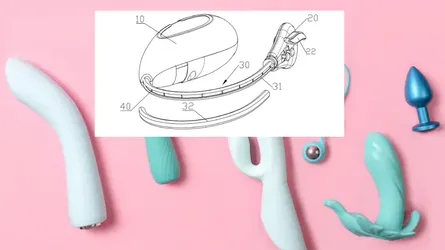
China's Patent Scene: Huge Opportunities, but Article 5 is a Hidden Minefield China's paAdult productsploding—global $50B by 2027 (Statista), with China leading manufacturing (Dongguan & Shenzhen). Yet Article 5 of the Patent Law is a silent killer, blocking grants for inventions seen as violating "social morality" or public interest. Designs saw a 15% rejection spike in 2024 due to visual cues, but utility and invention patents can stay steady if drafted right. The issue? Examiners tag products as "non-medical artificial sexual substitutes," sparking morality checks. From my examiner chats and database dives, if descriptions scream "intimate," initial reviews flop. Article content Kegel Exercises: Your "Medical Shield" to Bypass Article 5 How to flip it? Kegel exercises are your secret weapon. Developed by Dr. Arnold Kegel in the 1940s, these pelvic floor workouts help millions with incontinence, postpartum recovery, and quality of life (PubMed studies). In patents, a line like "vibration modes simulate Kegel contractions for muscle strengthening" shifts from "toy" to "health aid." Why? The 2023 guidelines say non-medical substitutes violate morals; Kegels provide real medical evidence (GB/T 14895-2010 standard), and examiners nod at that. In a case I handled, this turned a "no" into approval—but don't fake it; unsubstantiated claims risk fines. Article content patent illustration Drafting Magic: Lessons from a Smooth Success Case Drafting is the real art. Take CN223666103U, an "insertable electric massager" granted December 2025 without issues—just 10 months. It nailed it by focusing on "vibration mode indicators" over intimacy. CNIPA data shows medical-framed patents hit 85% approval in 2024, vs. 40% for pure adult ones. Here's their techniques vs. pitfalls I've fixed Article content This echoes trends: 2023 guidelines stress public acceptance—Taobao sales or Shanghai expos aren't "immoral." But controversies persist: Unproven health claims lead to rejections. Examiners aren't anti-innovation; they just need proof it's beneficial, not boundary-pushing. For Global Players: Stack US/EU Patents For global players, stack US/EU patents—USPTO's lenient on health claims, perfect for Amazon enforcement. Faced challenges in sensitive tech patents? Share below—I'd love your stories! #PatentStrategy #AdultWellness #ChinaIP #KegelInnovation #EntrepreneurJourney Key Citations: China National Intellectual Property Administration (CNIPA) Database Statista Adult Wellness Market Report PubMed on Kegel Exercises Beijing IP Court Case (2019) Jing 73 Xing Chu 3870 2023 Patent Examination Guidelines For more article, visit our Linkdedin newsletter: https://www.linkedin.com/newsletters/china-ip-gateway-7392039659566153728/