Type something to search...

Blog Posts

IPprotection
blog-thumb
By By Peter Lin, Founder of China IP Gateway & Co Author of “IP之道”/ On 26 Nov, 2025

Why “IP之道” Isn’t Just a Book — It’s a Blueprint for Your Brand’s China Entry

📘 From Theory to Blueprint When I co-wrote IP之道, my goal wasn’t to produce another academic book on patents or trademarks. It was to explain how businesses — from startups to global brands — can build real value through IP. see: https://www.amazon.com.br/Way-intellectual-first-line-innovation-companies/dp/7516415928 https://www.amazon.com/-/es/LIN-PAO-QIN-XIAO-PENG/dp/7516415928 Article content The book explores three essential ideas: IP as Strategy, not as Shield — Treat IP as part of your business design, not just a legal backup. From Filing to Operation — Owning rights is easy; using them to drive growth is the real skill. Cross-Border Mindset — In a globalized supply chain, your rights must move with your products. At the time, many Chinese companies were learning how to expand overseas. But in recent years, I’ve noticed the opposite need emerging — foreign companies now face serious IP challenges when manufacturing in China. Article content This realization led directly to the creation of China IP Gateway. 🌏 When Global Meets Local — The Birth of China IP Gateway In the past decade, I’ve helped hundreds of international clients protect their ideas and brands in China. Again and again, I saw the same pattern repeat itself: A European electronics brand loses its trademark to a former factory partner. A US startup’s product drawings are used for a “utility model” patent by its supplier. A global brand delays its registration, only to be blocked by Customs when exporting from Shenzhen. The problems were never just legal — they were structural. Foreign brands often had great IP portfolios abroad but no defense layer inside China. Article content That’s why I founded China IP Gateway — a platform designed to turn the principles of IP之道 into real-world protection. We connect foreign innovators with China’s IP system through: Trademark registration and defense strategies Patent filing and enforcement coordination Customs IP recordal and monitoring Integrated backend tracking system powered by OpenPTO In short, China IP Gateway is where global vision meets Chinese execution. 💡 Lessons from “IP之道” in Today’s Context Writing IP之道 taught me one powerful truth: “You can’t manage what you can’t see.” Most companies fail not because they don’t care about IP, but because they don’t map it. They treat IP as a document, not as an ecosystem. At China IP Gateway, we’ve built tools to visualize that ecosystem — to let clients see their filings, timelines, and risks in one centralized dashboard. This isn’t just about convenience; it’s about clarity. When you see how your IP connects with your supply chain, your decisions become faster, safer, and smarter. 🚀 Why It Matters Now In today’s geopolitical and commercial landscape, the gap between manufacturing in China and owning in China is widening. Factories can produce faster than ever, but legal systems move on paperwork — not promises. So if your products touch China, your brand protection must too. Otherwise, you risk being the innovator who became an imitator — not because you lacked creativity, but because you lacked registration. That’s the ultimate lesson of IP之道 — and the mission of China IP Gateway. ✳️ Final Thought When I wrote IP之道, I believed that understanding IP would help companies survive the age of innovation. But after years of working on both sides of the global supply chain, I’ve learned something deeper: IP is not just about survival — it’s about sovereignty. Your designs, your brand, your story — they deserve protection in the place where they are born, built, or shipped. That’s why we created China IP Gateway — to turn that philosophy into a system. A system where international founders can protect, monitor, and grow their intellectual assets — all from one trusted platform. If your products touch China, your IP strategy should too. Visit chinaipgateway.com to see how your brand can move from theory to defense. China IP Gateway, Peter Lin, IP之道, Intellectual Property China, Trademark Registration China, Patent Filing China, Brand Protection, OEM Risk, China Manufacturing, IP Strategy originally published in my Linkedin : https://www.linkedin.com/pulse/why-ip%E4%B9%8B%E9%81%93-isnt-just-book-its-blueprint-your-brands-china-peter-lin-usbsf/?trackingId=7czh0mfoSXS1xIHih2me1A%3D%3D
Patent Protection
blog-thumb
By Peter Lin/ On 15 Oct, 2024

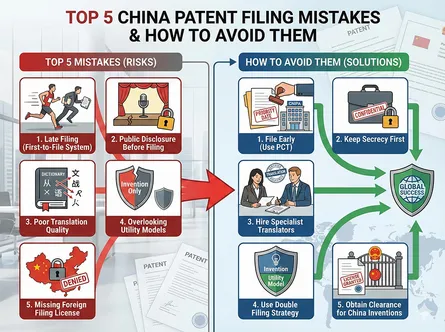
5 Critical Mistakes to Avoid When Filing Patents in China

When filing patents in China, many international companies make costly mistakes that could have been easily avoided. Based on our decade of experience handling 3,000+ IP cases, here are the five most critical errors and how to prevent them. 1. Waiting Too Long to File China operates on a strict "first-to-file" system. Unlike the US grace period, any public disclosure before filing can invalidate your patent application. We've seen companies lose patent rights simply because they presented at a conference before filing. Solution: File your Chinese patent application before any public disclosure, trade show, or academic publication. Consider filing provisionally to secure your priority date. 2. Using Direct Translation Without Technical Review Patent terminology requires precision. Direct translations often miss technical nuances or use incorrect Chinese technical terms, leading to weak patent claims or office action rejections. Solution: Work with IP professionals who combine technical expertise with translation skills. Our team includes Ph.D.-level experts who understand both the technology and Chinese patent terminology."Their backend QA system caught an error in our drawings that even our internal team missed. That's real expertise." - Dr. Andreas Müller, BioPhoton GmbH3. Ignoring the Patent Prosecution Highway (PPH) Many companies don't realize they can accelerate Chinese patent examination from 18-24 months down to 6-8 months using PPH, if they have corresponding patents in other jurisdictions. Solution: If you have granted or allowed patents in the US, Europe, Japan, or Korea, leverage PPH to fast-track your Chinese applications. This can save significant time and costs. 4. Filing Too Broad or Too Narrow Some companies file overly broad claims that get rejected, while others file too narrowly and miss protection opportunities. Both approaches waste time and money. Solution: Conduct thorough prior art analysis specific to China's patent database. Our strategic approach balances strong protection with realistic grant expectations. 5. Neglecting Portfolio Management Filing a patent is just the beginning. Without proper maintenance, renewal tracking, and strategic portfolio review, companies lose protection inadvertently or waste money on unnecessary patents. Solution: Use a systemized platform for tracking deadlines, renewals, and portfolio strategy. Our dashboard provides real-time visibility into your entire China IP portfolio. Key TakeawaysFile before any public disclosure Use technical experts for translations Leverage PPH when possible Balance claim scope strategically Implement systematic portfolio managementReady to protect your innovations in China the right way? Book a consultation with our patent experts today.

Trademark Protection
blog-thumb
By James Robertson/ On 20 Sep, 2024

China Trademark Registration Guide 2024: Everything You Need to Know

Understanding China's trademark system is crucial for any international brand entering the Chinese market. This comprehensive guide covers everything you need to know about trademark registration in China in 2024. Why Trademark Protection Matters in China China operates on a "first-to-file" system, meaning whoever files first owns the trademark rights—regardless of who used it first internationally. This has led to numerous cases of trademark squatting, where local entities register famous foreign brands before the actual brand owner does. Notable ExamplesNew Balance lost their Chinese trademark and had to pay $16 million Michael Jordan fought a 7-year legal battle over his Chinese name Tesla's trademark was initially registered by a Chinese businessmanThe Chinese Trademark Registration Process Step 1: Comprehensive Search (2-3 weeks) Before filing, conduct thorough searches across:Exact matches in all 45 Nice Classification classes Phonetic similarities in Chinese Visual similarities in logos Translation variationsPro Tip: Chinese consumers often create their own translations of foreign brand names. Search for these "folk translations" to avoid conflicts. Step 2: Chinese Name Selection Choosing the right Chinese name is critical. Consider:Phonetic similarity to your original name Positive meaning in Chinese Cultural appropriateness Memorability for Chinese consumers"The China IP Gateway team helped us build a full defensive trademark strategy. The dashboard showed real-time updates." - Kenji Tanaka, Luminex JapanStep 3: Multi-Class Filing Strategy Most brands need protection in multiple classes:Core classes: Your actual products/services Defensive classes: Adjacent categories where infringement is likely E-commerce classes: Class 35 for online retail is essentialStep 4: Application Filing (1-2 weeks) Required documents:Application forms for each class Clear trademark specimens Applicant identification documents Power of AttorneyStep 5: Examination (9-12 months) CNIPA (China National Intellectual Property Administration) reviews your application for:Absolute grounds (descriptiveness, prohibited marks) Relative grounds (conflicts with existing marks)Step 6: Publication & Registration (3 months) If approved, your trademark is published for opposition. If no opposition is filed within 3 months, you receive your registration certificate. Total Timeline: 12-15 months Pricing Structure Basic Registration: USD 600-900 per classIncludes search, filing, and official fees Monitoring during examination Certificate deliveryComprehensive Protection Package: Custom pricingMulti-class registration Defensive filing strategy Chinese name consultation Ongoing monitoringCommon Challenges & Solutions Challenge 1: Similar Existing Marks Solution: File in specific subclasses or modify your mark slightly while maintaining brand identity. Challenge 2: Descriptive Terms Solution: Add distinctive elements or create a coined term that's unique to China. Challenge 3: Translation Issues Solution: Work with native Chinese trademark experts who understand both linguistic and cultural nuances. Best Practices for International BrandsFile Early: Before entering the market or making announcements File Broadly: Cover all relevant classes from the start Monitor Actively: Set up trademark watching services Enforce Consistently: Take action against infringers quickly Use Professional Help: The cost of mistakes far exceeds professional feesPost-Registration MaintenanceRenewal: Every 10 years Use Requirements: Use within 3 years to avoid cancellation Record keeping: Maintain evidence of use Customs recordation: Register with Chinese customs for border enforcementConclusion Trademark protection in China requires proactive planning and expert guidance. With the right strategy, you can secure strong protection for your brand in the world's largest consumer market. Ready to protect your brand in China? Contact our trademark experts for a free consultation.

Patent Strategy
blog-thumb
By Dr. Sarah Chen/ On 10 Aug, 2024

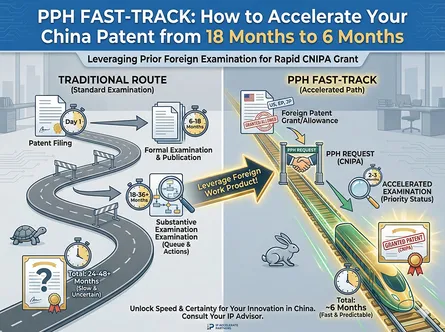
PPH Fast-Track: How to Accelerate Your China Patent from 18 Months to 6 Months

The Patent Prosecution Highway (PPH) is one of the most powerful tools for accelerating patent examination in China, yet many international companies don't know it exists or how to use it effectively. This guide explains everything you need to know about leveraging PPH for your China patents. What is PPH? The Patent Prosecution Highway is an international framework that allows patent applicants to fast-track examination in participating countries based on positive examination results from another patent office. China has PPH agreements with over 30 countries including the US, Europe, Japan, and Korea. Why PPH Matters for China Patents Traditional TimelineFiling to First Office Action: 12-18 months Total time to grant: 24-36 months Multiple examination rounds commonPPH TimelineFiling to First Office Action: 2-4 months Total time to grant: 6-12 months Fewer examination rounds"Peter and his team guided us through the PPH route, and our first CN patent was granted in 6 months — faster than we expected." - Alex Johnson, GreenCell RoboticsEligibility Requirements To use PPH for your China patent application, you must have:A corresponding application in a PPH partner country (US, EP, JP, KR, etc.) At least one allowed claim in the partner country application Matching claims between the foreign and Chinese applications Not yet started substantive examination in China (for most PPH types)Types of PPH Available in China 1. PPH MOTTAINAI (Standard PPH) Based on allowed claims from a single foreign application. Most commonly used route. 2. PCT-PPH Based on positive reports from PCT International Search or Examination. Particularly useful for startups filing internationally. 3. IP5 PPH Accelerated cooperation between the five largest patent offices (US, EP, JP, KR, CN). Offers the fastest track. Step-by-Step PPH Filing Process Step 1: Prepare Your Foreign Application Ensure you have:Allowance notice or positive examination report Copy of allowed claims Examination history documentsStep 2: File Chinese Application If not already filed, file your Chinese patent application via:Paris Convention route (within 12 months of priority) PCT national phase entry (within 30/32 months)Step 3: Submit PPH Request Before substantive examination begins, submit:PPH request form Allowed claims from foreign office Claim correspondence table Translation of allowed claimsStep 4: Pay Official FeesPPH request fee: Currently FREE in China Examination fee: Standard rates apply Attorney fees: Varies by firmStep 5: Respond to Expedited Examination CNIPA will typically issue first office action within 2-4 months. Response time is shortened to match accelerated timeline. Cost-Benefit Analysis CostsNo additional official fees for PPH request Professional fees: USD 1,200-1,800 Translation costs: Same as regular filing Total additional cost: ~15-20% over standard filingBenefits60% faster grant time Higher grant rates (90%+ vs. 70% average) Fewer office actions Earlier market protection Reduced uncertainty ROI: Significant for time-sensitive technologiesBest Practices for PPH Success 1. File PPH Request Early Submit your PPH request as soon as you have allowance in the partner country. Don't wait for Chinese examination to start. 2. Ensure Claim Correspondence Make sure your Chinese claims closely match your allowed foreign claims. Significant differences can delay or complicate PPH examination. 3. Prepare Comprehensive Translations High-quality translations of allowed claims and examination documents are critical. Poor translations can negate PPH advantages. 4. Have Documentation Ready Gather all required documents before filing:Allowance notice File wrapper documents Claim charts showing correspondence Professional translations5. Work with Experienced PPH Practitioners PPH procedures have specific requirements. Errors can result in rejection of the PPH request, wasting time and money. Common PPH Mistakes to Avoid Mistake 1: Waiting Too Long PPH requests must typically be filed before substantive examination begins. Once examination starts, PPH may not be available. Mistake 2: Claim Mismatches Chinese claims that differ significantly from allowed foreign claims will not qualify for PPH. Mistake 3: Incomplete Documentation Missing or incorrect documents will delay or reject your PPH request. Mistake 4: Wrong PPH Program Different PPH programs have different requirements. Using the wrong program wastes time. Real-World PPH Results Based on our experience with 500+ PPH filings:Average grant time: 8 months (vs. 24 months standard) Grant rate: 95% (vs. 70% standard) Office actions: 1.2 average (vs. 2.5 standard) Client satisfaction: 98%When NOT to Use PPH PPH isn't always the right choice:Claims not yet allowed in partner country Significant claim differences between applications No urgent need for quick grant Strategic reasons to slow examinationConclusion PPH offers dramatic acceleration of Chinese patent examination with high success rates and minimal additional costs. For companies with time-sensitive technologies or market entry plans, PPH can provide critical competitive advantages. The key to PPH success is proper preparation, claim correspondence, and working with experienced practitioners who understand both systems. Ready to accelerate your China patents? Contact our patent team to discuss PPH strategies for your portfolio.