Type something to search...

Blog Posts

Patent Filings
blog-thumb
By China IP Gateway/ On 01 Dec, 2025

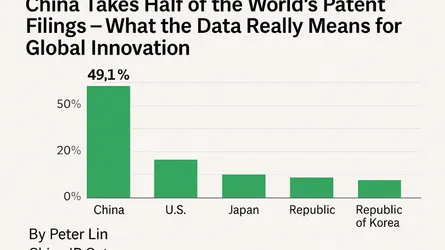
China Takes Half of the World’s Patent Filings — What the Data Really Means for Global Innovation

But instead of only looking at the number, I want to break down the structure behind it — and what it signals for global innovation. Here are the three essential shifts I think matter most. Article content The Way of IP 🔍 1. Why are China’s filings so high? It’s not “volume chasing” — it’s market structure + national strategy. In 2024, Chinese applicants filed 1.8 million invention patents. This isn’t a coincidence. Two forces are driving it: ① China’s massive domestic market demands rapid innovation. Fast product cycles Dense supply chains High competition across industries Patents act as a key defensive moat See content credentials Article content In such a large internal market, domestic filings will naturally concentrate. ② China is actively positioning high tech as the next economic growth engine. This part is important. China’s national strategy is now heavily oriented toward innovation, advanced manufacturing, and deep tech. 📌 So the high numbers are not an “anomaly” — they are the outcome of both structure and policy. 🔍 2. Why is China’s overseas filing ratio lower? It reflects different economic models, not different levels of ambition. This is the most misinterpreted WIPO number: China: 6.9% of filings go overseas US: 46% Japan: 43% Germany: 51% People often jump to conclusions, but the explanation is simpler: China’s innovation is anchored in a huge domestic market. Companies build their defensive position at home first, then expand overseas based on business needs. US, Japan, and Europe operate with global supply chains from day one. Their IP naturally follows international markets. 📌 These are two different innovation pathways — not “better or worse.” 🔍 3. From my own work at openPTO: China’s overseas patent activity is clearly accelerating. Beyond the statistics, my daily work gives me a very practical view: More Chinese companies are globalizing than ever before PCT filings and US/EU/JP national filings are rising steadily Overseas litigation risks are pushing companies to plan ahead Clients are shifting from “domestic protection only” → to “global positioning” 📌 China’s global patent layout is not slow — it’s in its acceleration phase. The next 3–5 years will be a structural turning point. 🌍 What does this mean for global innovators? Two opportunity windows are opening: ✓ Opportunity 1: Cross-border technical collaboration will grow rapidly. As Chinese companies globalize, we will see more: Joint R&D Co-patenting Technology licensing Standard-setting collaboration International manufacturing partnerships ✓ Opportunity 2: Demand for cross-border IP services will enter a long growth cycle. This directly affects: Patent attorneys IP lawyers Technology startups R&D institutions Investors China’s global expansion unlocks a new layer of IP demand. 📌 Key Takeaways China’s filing volume is driven by both market scale and national innovation strategy The lower overseas ratio reflects a stage of development, not a weakness China’s international filings are now clearly accelerating Global innovators will see increasing collaboration and service opportunities In the next issue, I’ll cover an equally important question: Why is China number one in “patent density,” yet still has a relatively small share of multi-jurisdiction patent families? And what does that mean for the next decade of global tech competition?

Protect Your Idea
blog-thumb
By China IP Gateway/ On 01 Dec, 2025

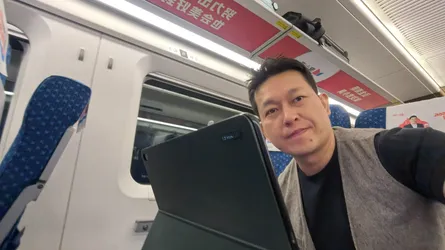
How to Protect Your Idea Quickly in China: A Personal Note from the Train

🇨🇳 Why Dual Filing Works in China A utility‑model patent covers structural or mechanical improvements and typically grants within about six months. Think of it as a quick shield. It gives you an enforceable right early, so you can show investors, partners and even Customs officials that your design is protected. Meanwhile, you simultaneously file a full invention patent, which takes longer but provides stronger, broader protection once it is granted. By starting them both together, you protect yourself at two speeds: fast and long‑term. Once the invention patent is issued, you can withdraw the utility model to avoid double. 🔍 Does it suit every innovation? This strategy shines for hardware or structural improvements—think product casings, mechanical components, new configurations or machinery. For software, algorithms or purely digital inventions, you still need to go through the standard invention patent route (which takes time), and other IP tools like copyright or trade secrets may be more appropriate. 🚀 My advice to fellow founders Don’t wait for perfection. File early, iterate quickly. In China’s “first to file” system, speed matters. Leverage the fast and slow lanes. A utility model buys you time; the invention patent keeps your protection strong for the long run. Tell your story. Investors and partners respond better when you can show that you’ve taken proactive steps to secure your IP, rather than saying “we’re working on it.” As someone who’s helped many startups navigate this path, I know first‑hand how disheartening it is to see a good idea copied simply because the filing happened too late. Don’t let that be your story. If your products touch China, your protection strategy should too. Feel free to reach out if you’d like help planning your IP filings or understanding which options best fit your product. Safe travels and safe ideas!

bring your product to China
blog-thumb
By China IP Gateway/ On 01 Dec, 2025

Overseas innovators: Wondering how to bring your product to China and actually make it happen?

Just yesterday, I got a message from an independent inventor with a clever sleep-tech idea. He wanted to know: Would Chinese sellers or manufacturers even be interested in something like this? Short answer? Yes — but only if it's the right kind of innovation. Here’s what top Chinese sellers (the kind dominating Amazon, Walmart, TikTok Shop) look for today: ✅ Unique, hard-to-copy features (think structural patents, not just design) ✅ Clear product-market fit (solves a real problem or trend) ✅ Preferably, some proof of traction (crowdfunding, early user base, etc.) From smart home to kids’ products, sleep tech to wearables — anything with functional improvement and IP protection can spark real interest. My advice? Research 3-5 target sellers in your product category. Reach out with a tailored, value-first message (they care about profits & uniqueness). Protect your idea before sharing — especially in China’s first-to-file system. Be open to small trial orders to build trust. Think partnerships, not pitches. And yes, IP matters — not to block people out, but to give your future partners confidence. IP Protection and Risk Prevention: The Foundation for Sustainable Cooperation Entering China can be incredibly rewarding, but you must play defense on your intellectual property from day one. Here are five practical tips I always give to overseas founders to build secure partnerships in China: File Chinese patents early – ideally before you make a big market entry or even before serious talks. China is a strict first-to-file system for patents. This means if you haven’t filed in China, someone else (even an unscrupulous manufacturer or a competitor) could file a patent for your invention in China and legally block you. I’ve seen a case where a European startup’s trusted factory quietly filed for a Chinese patent on the startup’s product – simply because the startup hadn’t filed first. Don’t let that happen to you. Even if you hold U.S. or European patents, remember that patents only protect you in the countries where you filed. So if China is on your horizon, secure at least a provisional application or a utility model patent in China as early as possible. It’s an investment that can save your business. Use NDAs and clear IP clauses in all agreements. Before sharing detailed designs or code, get a Non-Disclosure Agreement in place. It’s not just a formality – it sets the tone that you take your IP seriously. In any collaboration or distribution contracts, include explicit clauses about who owns existing IP and any jointly developed IP. For example, clarify that any technology or design you share remains your property, and any new improvements belong to you unless otherwise agreed. Yes, legal paperwork can feel awkward when you’re excited about a partnership, but any reputable Chinese partner will understand and respect these protections. If a company resists signing an NDA or keeps “forgetting” to discuss IP, that’s a red flag. (Side note: for extra protection, consider using an NNN agreement – Non-disclosure, Non-use, Non-circumvention – which is like NDA 2.0 in China.) Vet partners carefully – and avoid those who evade IP discussions. Do your homework on potential partners or distributors. Are they established? Do they have a history of respecting IP (e.g., no lawsuits or scandals for infringement)? If you’re talking to a manufacturer, do they also make their own products that might compete with yours? One practical tip: early in discussions, bring up IP protection and see how they react. The good ones will have no issue signing agreements and talking about how to protect your rights. If instead you hear, “Oh, you don’t need to worry about that here” or they get evasive, walk away. There are trustworthy, innovative Chinese companies out there – find the ones who truly want a win-win cooperation, not just to “learn” from your tech. Share information in stages – don’t hand over your entire secret sauce at once. You should never send complete product blueprints or source code on day one. A smarter approach is to share just enough info for that stage of the partnership. For instance, in initial talks or prototype development, you might share design sketches or a demo unit, but not the full engineering files. If a factory needs to quote costs, maybe give them simplified drawings or focus on one part of the product. As the relationship progresses and once you have stronger legal agreements in place, you can gradually share more. This way, if things don’t work out or if you catch a whiff of untrustworthy behavior, you haven’t given away the crown jewels. It’s like dating – build trust over time before you fully commit. earn from the fidget spinner’s cautionary tale – protect your patents and don’t let them lapse. Remember the fidget spinner craze? The inventor of the original fidget spinner, Catherine Hettinger, actually did patent her idea – but she surrendered her patent in 2005 because she couldn’t afford the $400 renewal feetheguardian.com. Article content A decade later, when fidget spinners became a global toy phenomenon, millions were sold… and she didn’t earn a cent from it. Her patent had lapsed, so she had no legal claim while others cashed in. Imagine how that felt! The lesson: secure your IP and keep it active. Don’t let a few hundred dollars or a missed deadline deprive you of a potential windfall. This applies to filing in the right markets too. If you believe China could be a big market (or source of competition) for your product, file the patent in China before someone else does. You don’t want to be the person saying “if only I had protected my idea, things would be different.” If you’re an overseas founder or product innovator wondering how to build real, secure partnerships in China, feel free to reach out to me. I’m always happy to share what I’ve learned and help fellow innovators succeed. You can email me at linpaoqin@openpto.com – or just send me a message here. I love hearing about new ideas, and I believe with the right approach, you can make your China venture a success story. Let’s connect and make it happen!

Kickstarter
blog-thumb
By China IP Gateway/ On 01 Dec, 2025

The Truth I Told a Chinese-American Founder About Launching on Kickstarter from China

When a hardware project goes live on Kickstarter, two things can happen: You go viral. Your copycats go viral before you. The classic case is StikBox (2015,see https://www.kickstarter.com/projects/634593202/stikbox-the-first-selfie-stick-case-for-iphone?utm_source=chatgpt.com). According to PetaPixel, only one week after the founder launched his selfie-stick phone case on Kickstarter, nearly identical copies from Chinese suppliers began appearing online — some for as low as $8, compared to the original ~$47. Article content Business Insider later reported the same trend: the design spread through the supply chain long before the original team shipped their first units. Article content This isn’t an isolated case. As someone who has spent a decade working between China manufacturing and global IP, I see this pattern every year. Kickstarter is not just a launchpad. It is a spotlight — and sometimes, a magnifying glass. And if you want to survive the exposure, you must get three things right:Protect: Secure Your Minimum Defensible Position Not perfection. Not a 300-page patent portfolio. Just the minimum protection needed to not get wiped out.Register your trademarks early (US + EU + China). China is a first-to-file country. Once someone else takes your brand name, Amazon, Alibaba, and major distributors will all block you.File 1–2 strategic patents. Most Kickstarter products need only:One core structural patent One design patent Enough to make copycats hesitate. Enough to give investors and future licensees confidence.On your Kickstarter page: show the effect, not the method. Beautiful demo video? Yes. Full technical breakdown? No.Chinese supply chains reverse-engineer from photos at astonishing speed.Manufacture: In China, “reliable” beats “cheap” by 10,000 miles Kickstarter founders often lose control not in the market, but in the factory.These are the rules I wish every founder knew: Article content NNN agreementAlways sign an NNN, not an NDA. NNN =Non-Disclosure Non-Use Non-Circumvention This is the version Chinese courts actually enforce.Don’t give full information to any single supplier. Split it:Factory A → housing Factory B → electronics Factory C → tooling Final assembly → your team or a trusted partner No one holds the full blueprint. Copying becomes much harder.Define OEM vs ODM from day one. If your agreement is vague:Your molds may be “shared” Your design may be claimed as “joint development” Your IP becomes impossible to enforce This isn’t theory — it’s weekly reality in Shenzhen and Dongguan.Commercialize: Sell Products or License IP? It Depends on Your Innovation Type Not every Kickstarter project should aim for the same “endgame.”Your best path depends on what kind of innovation you actually have. Here are the three real-world routes, refined from founder experience: Route A: Sell It Yourself (Direct Brand Sales) The best choice when: The category is not yet saturated You can control quality and supply chain Your brand story resonates You have appetite for long-term operations Article content Kickstarter gives you your first global brand exposure. Lean into it. Route B: License Core Structural Innovations (Structure-Based Licensing) This route is extremely powerful when: Article content Your exterior look is easy to copy, BUT the real innovation is inside the structure You own structural/utility patents Design-around is difficult or very costly Competing on price would destroy your margins The category is already crowded with copycats Perfect for: Robotics linkages Exoskeleton joints Motion-control assemblies Folding/slide mechanisms Mechanical sub-systems In these cases, licensing the structure often makes more money — with far better risk control — than selling hardware yourself. You earn: Upfront license fees Ongoing royalties Zero inventory pressure Zero logistics pain Route C: Brand Licensing (Brand Extensions) Choose this when: Your brand is stronger than your manufacturing capability Your Kickstarter success gave you real awareness Your brand naturally expands into related categories Regional brands want to use your name for local distribution Typical in: Outdoor gear Smart toys Lifestyle tech Niche consumer electronics Instead of scaling manufacturing yourself, you let stronger operators handle it — while you scale the brand. Article content In One Sentence Kickstarter is not just a campaign — it’s a stress test. Your long-term survival depends on how well you manage: Protection · Manufacturing · Commercialization Not just making a great product. But making a great strategy.